English
 Español
 عربى
عربى

Content
- 1 Understanding Spark Plug Wire Boot Protectors
- 2 High Heat Spark Plug Wire Boot Protectors Racing
- 3 Silicone Spark Plug Boot Protectors 8mm 10mm
- 4 Universal Spark Plug Wire Boot Heat Shields
- 5 Ceramic Spark Plug Boot Protectors for Headers
- 6 Reusable Spark Plug Wire Boot Sleeves Automotive
- 7 How to Select the Right Protection Level
- 8 Frequently Asked Questions
- 9 Conclusion
- 10 References
Ignition systems fail when spark plug wire boots degrade. Heat damages the rubber. Chemicals break down the material. Vibration causes cracks. Understanding how spark plug wire boot protectors work helps you prevent these failures. You need to know the science behind thermal protection, material selection, and proper installation.
Ningguo Zhongdian Insulation Materials Co., Ltd. operates from Yinbai Industrial Park in Ningguo City. The company sits within a national-level economic development zone in Southeast Anhui. They specialize in high-temperature resistant materials and fireproof composites. The business started in 2008. They hold import and export rights. They passed ISO9001 Quality Management System certification. They passed ISO14001 Environmental Management System certification. They develop high-temperature fiber composites sleeves. They produce high-temperature fabrics. They make insulation blankets. They manufacture automobile turbo guard systems. They obtained EU CE certification. They obtained US UL flame retardant certification. They passed ROHS6 testing. They export to the United States. They export to Southeast Asia. Their products serve metallurgy industries. Their products serve mining operations. Their products serve shipbuilding. Their products serve chemical plants. Their products serve automotive manufacturers. Their high-temperature-resistant composites sleeves resist flames. These sleeves have strong tensile strength. Their brands ""Zhongdian New Materials"" and ""CEIP"" hold strong market positions. They partner with large enterprises worldwide.
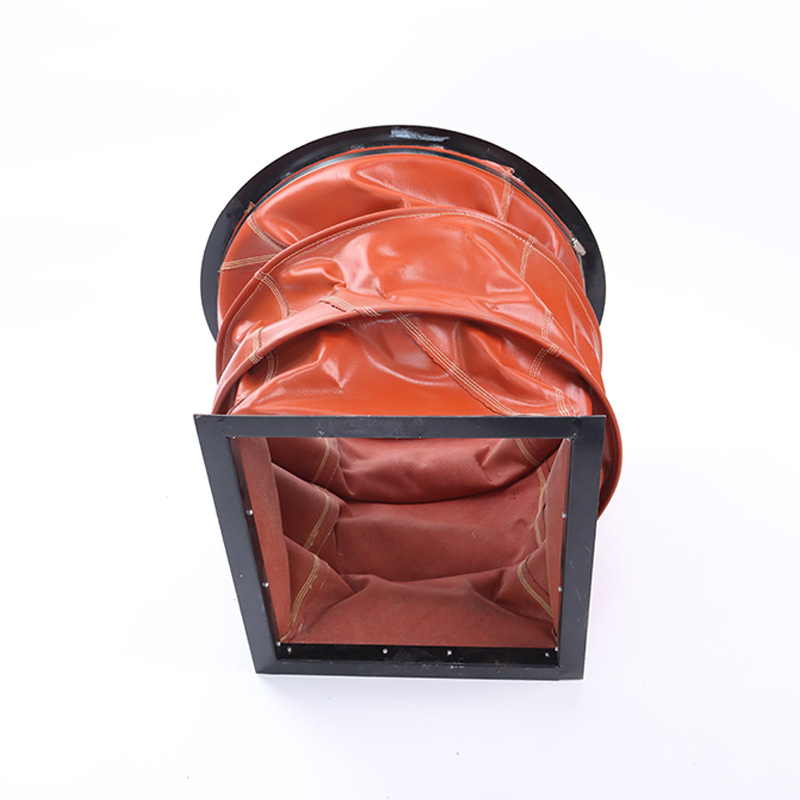
Understanding Spark Plug Wire Boot Protectors
What Damages Boots in High-Performance Engines?
Spark plug wire boots face extreme heat. Exhaust manifolds reach 650°C. Racing headers hit 760°C. Silicone rubber works well at normal temperatures. It resists electricity with high resistivity. But heat above 200°C speeds up aging. The rubber hardens. The rubber cracks.
Several failure modes exist:
- Thermal degradation hardens silicone and causes cracking
- Oil and chemicals reduce surface electrical resistance
- Vibration rubs boots against sharp metal edges
- Electrical tracking creates paths for misfires
Carbon tracking causes serious problems. Boot material burns slightly. Carbon forms on the surface. This carbon conducts electricity. At 15-20kV ignition voltage, electricity leaks through the carbon. Cylinders misfire. Catalytic converters damage. Fuel economy drops 15-25%.
How Heat Shields Extend Boot Life
Heat shields use three methods. They reflect heat. They insulate. They block convection. Good spark plug wire boot protectors combine reflective outer layers with insulating inner layers. The outer layer reflects 90-95% of radiant heat. The inner layer provides thermal resistance.
Different designs achieve different results:
| Protection Type | Temperature Drop | Max Heat Exposure | Life Extension |
| No Protection | Baseline 200°C max | 200°C continuous | 15,000-30,000 miles |
| Aluminized Fiberglass | 80-120°C drop | 650°C radiant | 50,000-75,000 miles |
| Ceramic-Coated Shield | 150-200°C drop | 800°C radiant | 100,000+ miles |
| Multi-Layer Composite | 180-220°C drop | 900°C radiant | 150,000+ miles |
High Heat Spark Plug Wire Boot Protectors Racing
Heat Levels in Racing Applications
High heat spark plug wire boot protectors racing face extreme conditions. Drag racers see 900°C header temperatures for 30 seconds. Then rapid cooling follows. Circle track racers endure 750°C heat for 45 minutes. Vibration hits 50-200Hz constantly.
Racing demands exceed normal car specs:
- Continuous temperature rating: 550°C
- Short-term peak: 800°C
- Electrical strength: 20kV/mm minimum under heat stress
- Tensile strength: 200MPa to resist vibration fatigue
- Weight limit: under 15g per protector
Thermal cycling matters greatly. Materials must survive 500+ heat cycles. Temperature swings from 25°C to 500°C repeatedly. Standard consumer protectors fail after 50-100 cycles. Racing materials last much longer.
Material Selection for Racing Heat
Racing needs special materials. Pure silicone fails above 250°C. Fiberglass-reinforced silicone works to 350°C. Header-proximate locations need ceramic-fiber composites. Stainless steel mesh adds strength.
Best racing construction uses multiple layers:
- Outer layer: 0.1mm aluminized PET film reflects 92%+ heat
- Middle layer: 0.5mm silica fiber insulates thermally
- Inner layer: 0.2mm silicone-coated glass blocks electricity
- Closure: Inconel wire or stainless steel rings
Ningguo Zhongdian's Composite Technology
Ningguo Zhongdian makes racing-grade protectors. They use silica-alumina fiber blends. These fibers melt at 1200°C. They stay flexible. ISO9001 certification ensures consistency. Fiber density varies only ±3% between batches. Coating thickness varies only ±0.02mm. Racing teams need this predictability. They build multiple engines. They need identical thermal performance each time.
Silicone Spark Plug Boot Protectors 8mm 10mm
Sizing for Different Wire Gauges
Silicone spark plug boot protectors 8mm 10mm must fit properly. Wires range from 7mm to 10.2mm diameter. Boots have different shapes. Protectors need 1.5-2.0mm clearance space. Compression reduces electrical insulation by 30-40%. You must avoid squeezing the wire.
Common wire sizes need specific protectors:
| Wire Type | Outer Diameter | Protector Inner Diameter | Length Needed |
| Standard 7mm | 7.0-7.5mm | 9.5-10mm (8mm nominal) | 75-100mm |
| Performance 8mm | 8.0-8.5mm | 10.5-11mm (10mm nominal) | 100-125mm |
| Heavy-Duty 10mm | 10.0-10.5mm | 12.5-13mm (12mm nominal) | 125-150mm |
| Boot-Only Cover | 15-20mm boot outer diameter | 22-25mm | 50-75mm |
Silicone vs. Fiberglass Comparison
Material choice involves trade-offs. Pure silicone bends easily. It fits tight spaces. But it degrades above 230°C. Fiberglass-reinforced silicone handles 350°C. It loses 40-60% flexibility.
Performance differs clearly:
- Pure silicone stretches 300-600% before breaking, tensile strength 5-10MPa
- Fiberglass-reinforced stretches 3-5%, tensile strength 100-200MPa
- Hybrid materials balance at 50-100% stretch, 50-80MPa strength
Installation Best Practices
Proper installation protects without damage. Slide protectors over boots. Do not stretch material beyond 10% of original size. For 8mm protectors on 7mm wires, this works well. Secure them properly:
- Stainless steel clamps at 2-3 N·m torque (higher torque cuts fiberglass)
- High-temperature zip ties rated for 250°C continuous use
- Wire stitching with Inconel or stainless steel thread
Universal Spark Plug Wire Boot Heat Shields
One-Size-Fits-All Limitations
Universal spark plug wire boot heat shields claim wide compatibility. They use expandable designs. But loose fit reduces thermal performance. A 2mm air gap cuts heat transfer efficiency 35-50%. Air conducts heat poorly at 0.026 W/m·K. Solid contact works much better.
Universal designs typically cover:
- Diameter range: 8mm to 12mm wires
- Length adjustment: 75mm to 150mm via fold-back design
- Closure options: Hook-and-loop (200°C max), snap buttons (250°C max), wire ties
Adjustable vs. Fixed Diameter Comparison
Engineering analysis shows clear trade-offs:
| Design Type | Thermal Efficiency | Install Speed | Vibration Resistance | Relative Cost |
| Fixed 8mm | 95-98% | Fast slip-on | Excellent | 1.0 baseline |
| Fixed 10mm | 95-98% | Fast slip-on | Excellent | 1.0 baseline |
| Wrap-Around Adjustable | 75-85% | Moderate wrapping | Good | 1.3x |
| Expandable Sleeve | 60-75% | Fast stretch fit | Fair (loose) | 1.5x |
| Custom Molded | 98-99% | Slow boot replacement | Superior | 3.0x |
Application-Specific Modifications
You can improve universal protectors:
- Add thermal paste to fill air gaps
- Wrap extra aluminum foil at critical hot spots
- Use multiple small protectors instead of one loose large one
- Add safety wire for racing applications
Ceramic Spark Plug Boot Protectors for Headers
Reflective Heat Management
Ceramic spark plug boot protectors for headers work by reflection. They do not just insulate. Ceramic coatings use aluminum oxide or zirconium dioxide. They achieve emissivity of 0.1-0.2. This means they reflect 80-90% of radiant heat. Black silicone boots have emissivity of 0.9. They absorb 90% of heat.
Radiant heat follows physical laws. The Stefan-Boltzmann equation states: heat transfer equals emissivity times temperature to the fourth power. Dropping emissivity from 0.9 to 0.15 reduces heat absorption by 83% at any temperature.
Spacing Requirements from Headers
Protection requires proper distance. Even ceramic shields fail with direct contact at 700°C. Conductive heat overwhelms reflective protection. Minimum safe clearances:
- With ceramic protector: 12-15mm from header tube
- With aluminized fiberglass: 25-30mm minimum
- With standard silicone: 50-75mm minimum
- With no protection: 100mm or more required
Tight engine bays challenge this. Boots often sit within 10mm of 750°C tubes. Only ceramic-fiber rigid shields or multi-layer systems work here.
Ningguo Zhongdian's Ceramic Composites
Ningguo Zhongdian produces CE-certified ceramic protectors. They use alumina-silica fiber matrices. They bind with colloidal silica. These materials handle 1260°C continuously. They melt at 1800°C. UL certification ensures flame safety. Materials self-extinguish within 5 seconds. This meets motorsport safety rules. Their ceramic sleeves survive 1000 thermal shocks. Temperature swings from 25°C to 1000°C. This exceeds automotive needs by 10 times.
Reusable Spark Plug Wire Boot Sleeves Automotive
Service Life Factors
Reusable spark plug wire boot sleeves automotive applications need durability. Standard heat-shrink tubing works once. True reusable systems use mechanical closures. They use high-elasticity materials. These maintain shape after 50+ installation cycles.
Durability tests include:
- Flex test: 10,000 bends at 90 degrees without cracking
- Abrasion test: 500 rubs against 220-grit sandpaper without breakthrough
- Chemical test: 1000 hours in 5W-30 oil without 10% swelling
- Heat aging: 1000 hours at 250°C without 30% strength loss
Cost Analysis: Disposable vs. Reusable
Lifecycle costs favor reusables for fleets and racing. Initial cost runs 3-5x higher. But long-term savings emerge:
| Cost Factor | Disposable Per Set | Reusable Per Set | Break-Even Point |
| Initial Purchase | $15-25 | $60-100 | Not applicable |
| Install Labor 0.5 hours | $40-60 | $40-60 first only | First use |
| Replace Interval | 30,000 miles | 150,000 miles | 60,000 miles |
| 5-Year Total 100k miles | $110-185 for 2-3 sets | $60-100 for one set | Immediate |
| 10-Year Total 200k miles | $220-370 | $60-100 possibly second set | Immediate |
Maintenance Protocols
Reusable protectors need periodic care:
- Inspect every 15,000 miles for coating damage
- Clean with isopropyl alcohol to remove oil (oil reduces reflectivity)
- Check closures. Replace stainless ties if hardened.
- Store relaxed when removed. Prevent compression set.
How to Select the Right Protection Level
Mapping Your Engine Bay Heat Zones
Selection requires thermal analysis. Infrared cameras show header proximity varies by vehicle:
- Cast iron manifolds: 550-650°C surface, slower heating
- Short-tube headers: 650-750°C, rapid temperature changes
- Long-tube racing headers: 700-850°C, sustained high heat
- Turbocharger housings: 750-950°C, needs turbo guard systems
Selection matrix by application:
- Stock engines with cast manifolds: Standard silicone or basic fiberglass
- Performance engines with headers: Aluminized fiberglass minimum
- Racing and competition: Ceramic-fiber or multi-layer composites
- Turbocharged builds: Ceramic with integrated turbo guard
Ningguo Zhongdian's Technical Services
Ningguo Zhongdian supports distributors and OEMs. Their engineers analyze customer thermal profiles. They use heat transfer modeling software. They recommend optimal materials, diameters, and installation methods. Their ""Innovation, Integrity, Cooperation, and Win-Win"" philosophy includes partner support. They provide training materials. They share thermal testing data. They develop custom products for special automotive needs.
Frequently Asked Questions
At what temperature do unprotected boots fail?
Unprotected silicone boots age rapidly above 200°C. Immediate damage occurs at 250-300°C. Carbon tracking starts around 220°C with oil contamination. Racing with 750°C+ headers destroys boots in single sessions without protection.
Can I use 8mm protectors on 10mm wires?
No. Undersized protectors create safety hazards. Compression reduces electrical insulation 30-40%. This increases arcing risk. Stretched protector material thins 20-30%. This reduces thermal protection. Always match exact diameters. Use 10mm protectors for 10mm wires.
How do ceramic and fiberglass compare for daily drivers?
For daily drivers with cast iron manifolds at 550-650°C, fiberglass-aluminum composites suffice. They cost less. They flex more. Ceramic justifies cost when: you operate within 15mm of 700°C+ headers, you run sustained high loads, or you need 150,000+ mile service. Ceramic rigidity complicates installation in tight spaces versus conformable fiberglass.
What causes protectors to turn brown or black?
Discoloration signals degradation. Brown indicates silicone oxidation above 200°C. Black shows carbon deposits from oil vapor or exhaust. White ash suggests coolant contamination. Any discoloration with hardening or cracking requires immediate replacement. Dielectric properties have fallen below safe levels.
Does Ningguo Zhongdian offer custom sizes?
Yes. Ningguo Zhongdian provides custom development for volume orders. They manufacture diameters from 6mm to 25mm. They make lengths to 300mm. They create special closures for unique engines. Custom development uses ISO9001-certified quality systems. They leverage materials expertise in high-temperature fibers. Lead times run 4-6 weeks for new specifications.
Conclusion
Selecting spark plug wire boot protectors requires matching protection to your engine bay conditions. High heat spark plug wire boot protectors racing applications need 800°C+ resistance. Silicone spark plug boot protectors 8mm 10mm serve daily drivers well. Universal spark plug wire boot heat shields offer convenience but may sacrifice thermal efficiency. Ceramic spark plug boot protectors for headers provide superior heat reflection in extreme environments. Reusable spark plug wire boot sleeves automotive systems deliver long-term value for professional use. Partnering with specialized manufacturers like Ningguo Zhongdian Insulation Materials Co., Ltd. gives you access to certified, engineered solutions. Their expertise in high-temperature materials science ensures reliable ignition protection.
References
- Society of Automotive Engineers, SAE J2032: Spark Plug Ignition Cable, SAE International, Warrendale, PA, 2018.
- ASTM D412, Standard Test Methods for Vulcanized Rubber and Thermoplastic Elastomers—Tension, ASTM International, West Conshohocken, PA, 2021.
- Underwriters Laboratories, UL 94: Standard for Safety of Flammability of Plastic Materials, UL LLC, Northbrook, IL, 2013.
- Heywood, J.B., Internal Combustion Engine Fundamentals, 2nd Edition, McGraw-Hill Education, New York, 2018.
- Incropera, F.P., and DeWitt, D.P., Fundamentals of Heat and Mass Transfer, 7th Edition, John Wiley & Sons, Hoboken, NJ, 2011.
- International Electrotechnical Commission, IEC 60243-1: Electrical Strength of Insulating Materials, Geneva, 2013.
- SAE International, SAE Paper 2003-01-1354: ""Thermal Management of Spark Plug Boots in High-Performance Engines,"" 2003.