English
 Español
 عربى
عربى

Content
- 1 Radiant Heat vs. Molten Splash — Know the Hazard
- 2 Aluminum Foil Fiberglass Sleeve — Built to Reflect Radiant Heat
- 3 Silicone Rubber Coated Sleeve — the Molten Splash Barrier
- 4 Side-by-Side Comparison: Key Differences at a Glance
- 5 How to Choose the Right Sleeve — and When to Combine
- 6 Frequently Asked Questions
- 6.0.1 Q1: What is the main difference between an aluminum foil fiberglass sleeve and a silicone rubber coated sleeve?
- 6.0.2 Q2: Can an aluminum foil fiberglass sleeve protect against weld spatter?
- 6.0.3 Q3: Which sleeve is more resistant to abrasion?
- 6.0.4 Q4: Are these sleeves suitable for automotive exhaust and turbocharger lines?
Every industrial hose, cable, and wire harness operates under a specific kind of thermal threat, and the sleeving that protects it must match that threat exactly. Two products are frequently compared in this context: the aluminum foil fiberglass sleeve and the silicone rubber coated sleeve. Both start with a braided fiberglass carcass, but they diverge sharply in how they hold back heat. The first is a mirror-like shield against radiant heat; the second is a dense, resilient barrier against molten splash. Knowing the difference between these two failure modes is the key to a confident specification.
Radiant Heat vs. Molten Splash — Know the Hazard
Radiant heat travels as electromagnetic energy. When a furnace wall, exhaust manifold, or turbocharger housing becomes hot, it radiates infrared energy toward everything nearby. The energy heats unprotected surfaces even without direct flame contact. Against this type of heat, dark and porous materials absorb the radiation and conduct it inward. A reflective outer layer, in contrast, redirects a significant portion of the energy away from the protected cable or hose.
Molten splash is a fundamentally different event. Weld spatter, brazing droplets, and splashing metal from casting operations produce small streams and droplets of liquid metal that can exceed 1,000°C. These droplets strike the sleeving, cool quickly, and often try to adhere, continuing to burn after landing. A thin reflective layer alone may handle one splash, but heavy or repeated exposure can melt, char, or open a path through it. The ideal countermeasure is a smooth, non-stick surface that makes each droplet bead up and fall away before it can transfer much energy.
Radiant Heat
Infrared energy radiating from surfaces such as exhaust pipes, furnace walls, and turbochargers. Components are heated without direct contact, so the sleeve must reflect the energy rather than absorb it.
Molten Splash
Liquid metal droplets and weld spatter striking the sleeve and attempting to adhere. The sleeve needs a smooth, durable surface that sheds the droplet and resists burn-through.
Aluminum Foil Fiberglass Sleeve — Built to Reflect Radiant Heat
The aluminum foil fiberglass sleeve is produced by braiding stranded fiberglass yarn into a flexible tube and laminating a polished aluminum foil layer onto its outer surface. The mirror finish is the core of its function. When radiant heat strikes the sleeve, the foil reflects most of the infrared energy, so the substrate remains visibly cooler than the radiating surface facing it.
Because the protection comes from reflection, the sleeve can be wrapped close to very hot surfaces without immediate degradation. The fiberglass base provides a continuous service temperature around 260°C and withstands far higher radiant exposure because the foil prevents the base from absorbing the heat. The composite is lightweight, flexible, and simple to cut, clamp, or lace into place, which makes retrofitting on existing harnesses and hoses straightforward. We explain the working principle in detail in our analysis of how an aluminum foil fiberglass sleeve becomes an indispensable component of heat shielding.
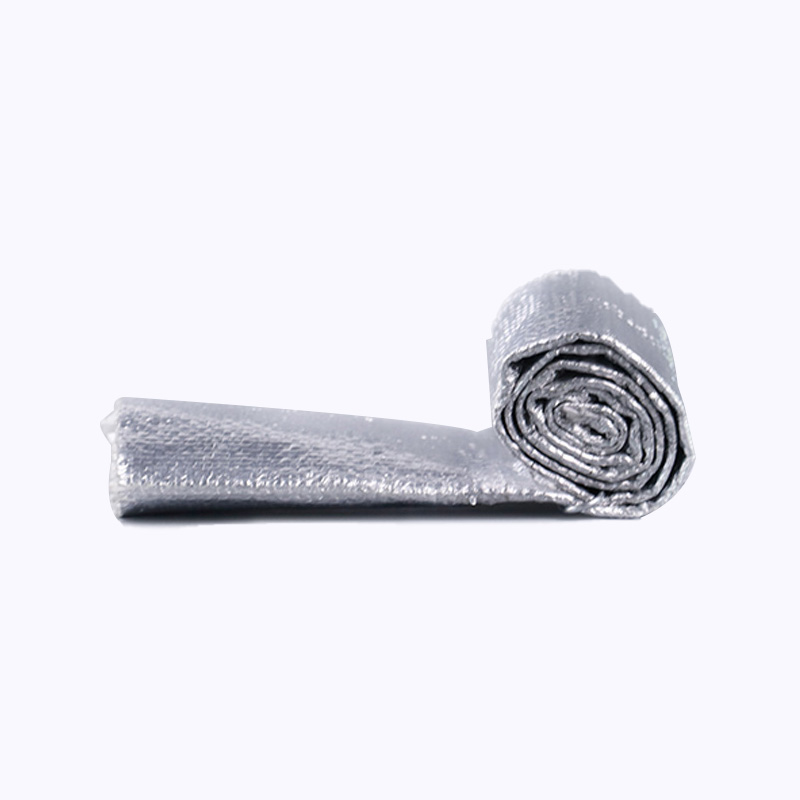 Aluminum Foil Fiberglass Sleeve for Radiant Heat ProtectionThis dual-layer sleeve reflects up to 90% of radiant heat while its fiberglass base withstands continuous 260°C service. It suits retrofit protection for harnesses and hoses near hot surfaces, though it may not resist abrasive damage or molten splash.View Product →
The limitations are equally important. The foil is thin, and mechanical abuse can scratch or tear it; once the reflective layer is damaged, heat flows through the damaged area. Molten splash also behaves poorly on foil because aluminum drops tend to bond to the surface rather than run off. For splash-dominated environments, a coated construction is usually the better answer.
Silicone Rubber Coated Sleeve — the Molten Splash Barrier
A silicone rubber coated sleeve consists of a fiberglass braid covered by a cured silicone rubber layer that forms a continuous, smooth outer skin. The protection principle is different from reflection: the elastic coating gives molten droplets nothing to grip. A droplet strikes the surface, spreads slightly, and then contracts into a spherical bead that rolls away before it can conduct significant heat into the sleeve.
The coating adds more than splash resistance. It seals the weave, preventing moisture, oil, dust, and conductive contaminants from migrating through the glass fibers toward the protected component. It also damps vibration and cushions light impacts, which is why silicone rubber coated constructions appear in engine compartments and automated welding cells. The material remains flexible through repeated thermal cycling and resists cracking far better than a hard shell would.
Because the coating technology is not limited to a single shape, the same silicone rubber fiberglass compound is available as a fabric for covering panels and large irregular equipment. This flexibility lets design teams match the format to the component geometry instead of forcing every application into a tube.
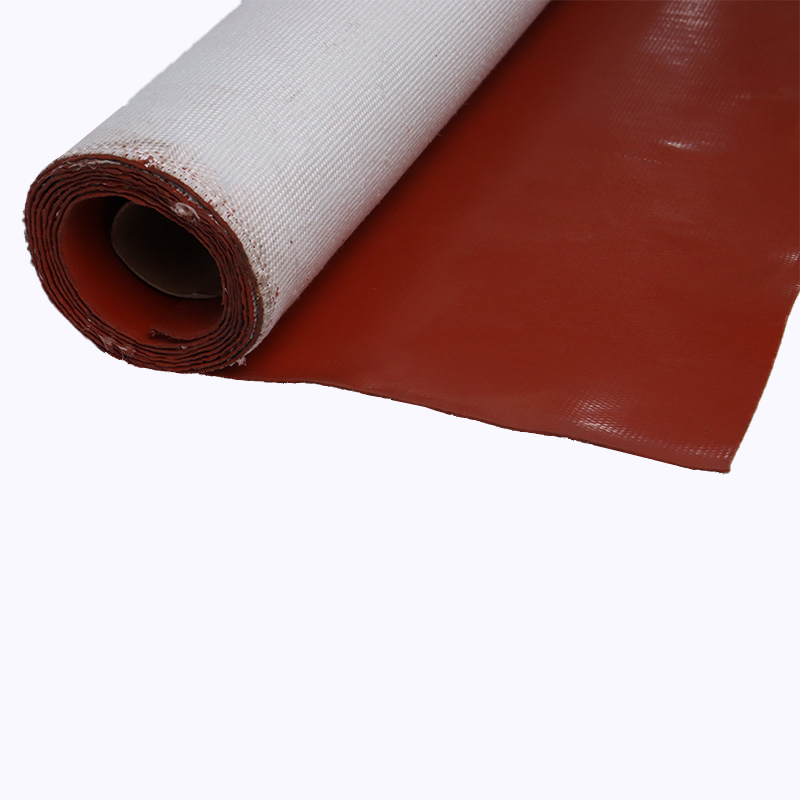 Silicone Rubber Fiberglass Fabric for Fire and Flame ResistanceA versatile coated fabric available in multiple thicknesses, offering flame retardancy, no dripping, and low smoke. It can be fabricated into welding curtains, fire blankets, and insulation covers, making it suitable for irregular equipment and large panels.View Product →
Side-by-Side Comparison: Key Differences at a Glance
The table below summarizes the practical differences between the two materials.
| Property | Aluminum Foil Fiberglass Sleeve | Silicone Rubber Coated Sleeve |
|---|---|---|
| Primary mechanism | Reflects radiant heat | Sheds molten splash, seals and cushions |
| Surface character | Polished metallic foil | Smooth elastomer skin |
| Continuous temperature | Around 260°C; reflects higher radiant sources | Around 260°C depending on compound |
| Molten splash behavior | Droplets may adhere | Droplets bead up and roll off |
| Abrasion resistance | Moderate; foil can tear | Good; elastomer absorbs wear |
| Moisture and contaminant seal | Partial | Continuous sealed surface |
| Typical applications | Exhaust lines, turbocharger areas, furnace radiant zones | Welding cells, foundries, casting, robotic lines |
Read the table with the hazard in mind. If radiant heat is the dominant risk and mechanical wear is low, the foil sleeve is efficient and cost-effective. If molten splash, sparks, and physical contact are regular events, the silicone rubber coated sleeve will keep the protected assembly intact longer.
How to Choose the Right Sleeve — and When to Combine
Match the sleeve construction to the failure mode that actually exists in the installation, not to the highest temperature number on the data sheet.
Hazard first, temperature second. A sleeve that cannot shed the hazard that actually exists will fail early, no matter how high its nominal temperature rating is.
- Radiant heat dominant: choose an aluminum foil fiberglass sleeve, especially when space is limited and the heat source is a nearby manifold, turbocharger, or furnace wall.
- Molten splash dominant: choose a silicone rubber coated sleeve for weld spatter, brazing splash, foundry work, and other liquid metal exposure.
- Mixed environment: layer the two approaches. Reflect the radiant heat with a foil sleeve, then seal the cut ends, joints, and irregular fittings with a silicone rubber self-adhesive tape. The tape conforms to bends and terminals where a pre-formed sleeve cannot be fitted.
- Mechanical conditions: if the sleeve rubs against brackets or equipment, the elastomer coating will outlive a thin foil layer.
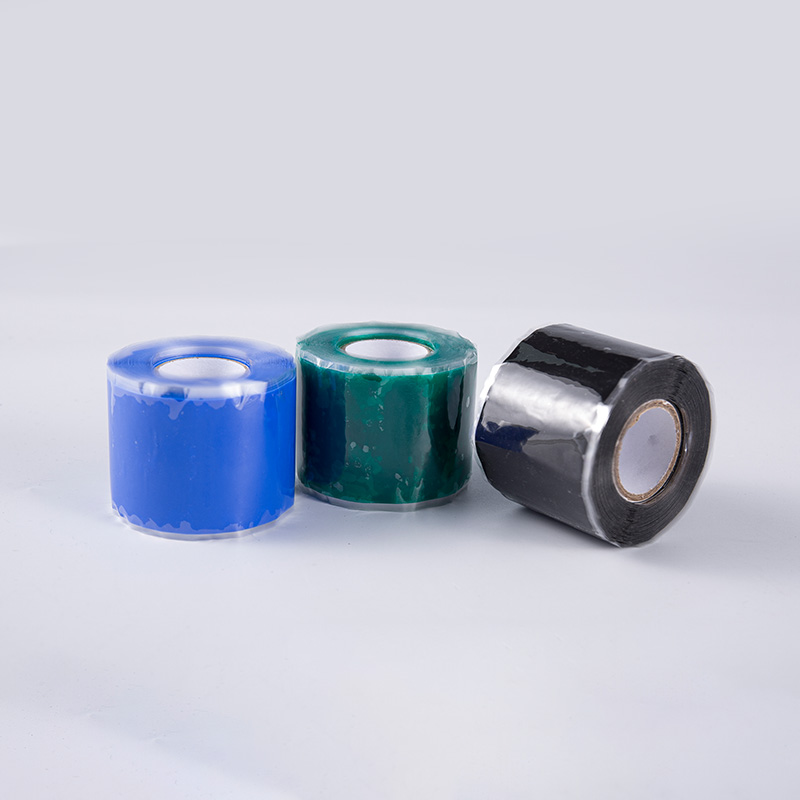 Silicone Rubber Self-Adhesive Tape for Cable InsulationThis self-bonding tape provides continuous 250°C resistance and is rated for primary insulation up to 35kV. It protects high-voltage cable joints, switches, and outdoor equipment from moisture, UV, and corrosive environments in industrial and marine settings.View Product →
Both families are available in multiple diameters and wall thicknesses. The right reference point is the full range of high-temperature-resistant sleeves, which presents the two constructions side by side and makes it easy to compare options for a specific cable, hose, or harness bundle.
Frequently Asked Questions
Q1: What is the main difference between an aluminum foil fiberglass sleeve and a silicone rubber coated sleeve?
The aluminum foil fiberglass sleeve reflects radiant heat with a polished metallic surface. The silicone rubber coated sleeve uses a dense elastic coating to shed molten splash, seal out contaminants, and resist abrasion.
Q2: Can an aluminum foil fiberglass sleeve protect against weld spatter?
It is not the best choice for heavy weld spatter. Molten metal drops tend to adhere to the foil and can burn through the thin layer. A silicone rubber coated sleeve handles splash more reliably.
Q3: Which sleeve is more resistant to abrasion?
The silicone rubber coated sleeve. The elastomer layer absorbs rubbing and impact, whereas the aluminum foil layer is thin and can be scratched or torn by sharp edges and repeated motion.
Q4: Are these sleeves suitable for automotive exhaust and turbocharger lines?
Yes. A foil sleeve works well where radiant heat from the manifold or turbocharger is the main threat. A silicone rubber coated construction is preferred when the same area also sees moisture, oil, or mechanical contact.
Neither sleeve is universally superior. The aluminum foil fiberglass sleeve earns its place wherever reflecting radiant energy is the priority, and the silicone rubber coated sleeve earns its place wherever molten splash and mechanical wear dominate. Evaluate the hazard honestly, match the construction to the failure mode, and the protected cable or hose will perform reliably for much longer.