English
 Español
 عربى
عربى

Content
- 1 Understanding the Thermal Threat to Ignition Systems
- 2 Technical Composition and Material Science
- 3 Performance Evaluation and Material Comparison
- 4 Application and Installation Engineering
- 5 Solving Common Failure Modes
- 6 Procurement Considerations for B2B Buyers
- 7 Conclusion
- 8 Frequently Asked Questions
- 9 References
Understanding the Thermal Threat to Ignition Systems
In high-performance and heavy-duty engine environments, thermal management is a critical engineering challenge. The ignition system operates in close proximity to exhaust manifolds and cylinder heads, which generate extreme radiant heat. Spark plug wire boot protectors serve as a primary defense mechanism in this hostile thermal environment. These components are designed to shield the dielectric insulation of the spark plug wire from direct heat absorption.
The Mechanics of Boot Melting
Standard spark plug boots are typically manufactured from silicone rubber or EPDM materials. While these polymers offer excellent electrical insulation, they have defined thermal limits. When exposed to temperatures exceeding their glass transition point, the polymer chains begin to degrade. This degradation leads to softening, melting, or carbonization. The phenomenon of spark plug boot melting prevention is central to maintaining ignition timing accuracy. When a boot melts, it can fuse to the ceramic insulator of the spark plug, causing misfires and difficult maintenance removal.
Consequences of Thermal Degradation
Thermal degradation compromises the dielectric strength of the boot. When the material loses its structural integrity, the high-voltage current can arc to the nearest ground source, typically the cylinder head, instead of jumping the spark plug gap. This short-circuiting results in a lean misfire, increased hydrocarbon emissions, and potential damage to the catalytic converter. Engineers must prioritize high temperature ignition wire protection to ensure the longevity of the entire ignition system.
Technical Composition and Material Science
The efficacy of a protector relies heavily on its material composition. Modern protectors utilize advanced textiles to create a thermal barrier for spark plug wires.
Fiberglass Spark Plug Boot Protector Design
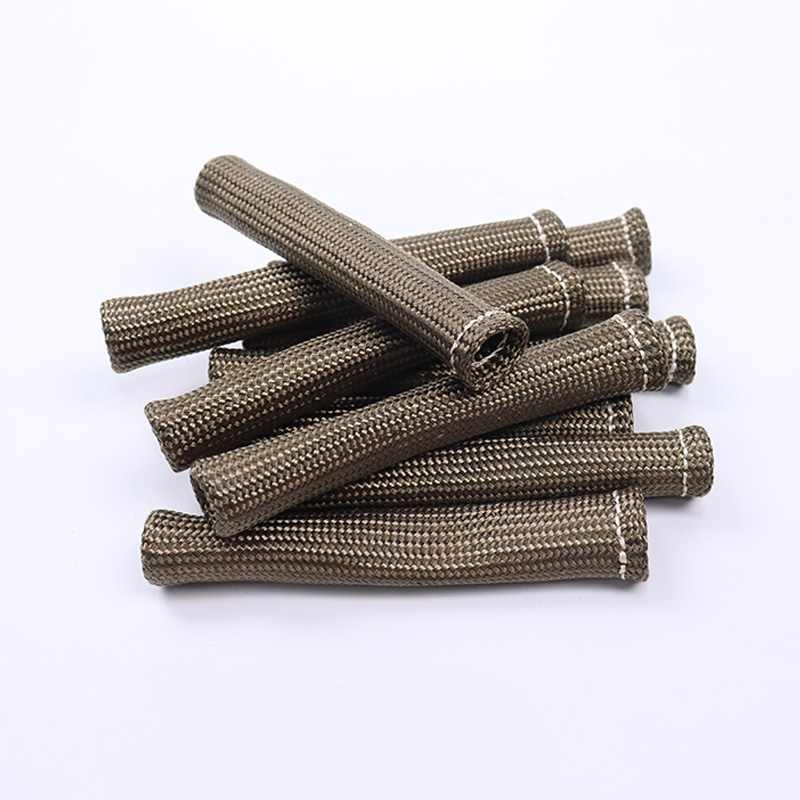
The most common industry standard is the fiberglass spark plug boot protector. This product typically consists of a woven fiberglass sleeve. Fiberglass possesses an inherent resistance to high temperatures, often capable of withstanding continuous exposure up to 1000°F (538°C). The weaving process creates an air gap between the strands, which further enhances the insulation properties by reducing thermal conductivity. Some variants feature a vermiculite coating, which expands when heated to increase the insulation density.
Material Thickness and Weave Density
From an engineering perspective, thickness and weave density are critical specifications. A thicker wall provides greater thermal resistance but can lead to clearance issues in tight engine bays. A tight weave prevents hot gases from penetrating the sleeve. Manufacturers must balance flexibility with thermal mass to ensure the protector can be installed easily while maintaining a robust shield.
Performance Evaluation and Material Comparison
Selecting the correct material for a specific application requires comparing thermal limits and durability. Different engines generate different heat profiles. A naturally aspirated engine may require less protection than a turbocharged engine with an exhaust gas temperature (EGT) exceeding 1600°F.
The table below compares the performance characteristics of common protector materials used in the industry.
| Material Type | Continuous Temperature Rating | Primary Advantage | Best Application |
| Woven Fiberglass (Base) | 1000°F (538°C) | Cost-effective, Flexible | Standard OEM replacement, Street use |
| Basalt Fiber | 1400°F (760°C) | Higher abrasion resistance | Heavy-duty diesel, Industrial engines |
| Silica/High-Silica Glass | 1800°F (982°C) | Extreme heat resistance | Turbocharged, Racing applications |
| Ceramic Fiber | 2000°F (1093°C) + | Maximum thermal barrier | Top Fuel Dragsters, Extreme EGT |
Application and Installation Engineering
Proper installation ensures that the protector functions as intended. A spark plug wire heat shield sleeve must be positioned correctly to block the radiant heat source.
High Temperature Ignition Wire Protection Installation
Installation typically involves sliding the sleeve over the spark plug boot before connecting the wire. The sleeve must extend past the end of the boot to cover the vulnerable termination point. Installers should use stainless steel locking ties to secure the sleeve in place. These ties prevent the sleeve from sliding back due to engine vibration. It is important to ensure the sleeve does not contact the exhaust manifold directly, as this would create a heat soak path.
Compatibility with Engine Architectures
Engine bay layouts vary significantly. In V-type engines, the spark plugs are often located deep in the valley or against the headers. These confined spaces trap heat, making protectors mandatory. Inline engines may have better airflow, but turbochargers can drastically increase under-hood temperatures. Engineers must specify protectors with appropriate inner diameters to fit different boot sizes without restricting the wire.
Solving Common Failure Modes
Even with protectors, improper selection can lead to failure. Understanding the root cause of these failures helps in specifying the correct part number for wholesale orders.
Spark Plug Boot Melting Prevention Strategies
Effective spark plug boot melting prevention strategies involve more than just adding a sleeve. Engineers must ensure the boot material itself is rated for the ambient under-hood temperature. The protector acts as a shield, but it does not actively cool the wire. Airflow management within the engine bay is a complementary strategy. In some cases, forced air ducting is used to direct cool air towards the spark plug wells. Combining active cooling with passive insulation provides the most robust solution for high-output engines.
Procurement Considerations for B2B Buyers
Wholesalers and distributors must verify the quality assurance data from manufacturers. Not all protectors meet the advertised temperature ratings.
Sourcing Bulk Spark Plug Wire Heat Shield Sleeve
When purchasing a spark plug wire heat shield sleeve in bulk, buyers should request thermal conductivity test reports. These reports provide empirical data on how much heat is transferred through the material. It is also advisable to check the oil resistance of the material. Engine bays contain oil mist and coolant vapors. A protector that absorbs oil can become a fire hazard if the oil ignites. High-quality sleeves are treated with coatings that repel oil and hydraulic fluids.
Conclusion
Spark plug wire boot protectors are a small but vital component in modern engine design. They mitigate the risk of thermal damage to ignition wires. By understanding the material science behind fiberglass spark plug boot protector options and implementing proper installation protocols, engineers can significantly reduce warranty claims related to ignition failure. For B2B buyers, prioritizing material specifications over unit cost ensures product reliability. This approach secures long-term partnerships with demanding industrial and automotive clients.
Frequently Asked Questions
- What is the maximum temperature a spark plug boot protector can withstand?
- Standard fiberglass protectors typically withstand continuous temperatures of 1000°F. High-performance ceramic or basalt fiber options can tolerate temperatures up to 2000°F, suitable for extreme racing environments.
- Can I install spark plug boot protectors on existing wires?
- Yes, most protectors are designed as retrofit solutions. You can slide the sleeve over the existing boot and secure it with thermal ties. However, for optimal performance, ensure the existing boot is not already damaged or brittle.
- Do spark plug boot protectors cause heat soaking?
- If installed incorrectly, they can trap heat near the boot. However, their primary function is to reflect radiant heat. A properly installed sleeve creates an air gap that acts as an insulator, actually reducing heat soak into the boot material.
- How do I know if my spark plug wires need protection?
- If your engine is turbocharged, supercharged, or has tight clearance between the exhaust manifold and spark plugs, protection is necessary. Signs of need include hard starting after the engine is hot or visible cracks and melting on old boots.
References
- Haynes, W. M. (2014). CRC Handbook of Chemistry and Physics. CRC Press.
- Bosch, R. (2022). Automotive Handbook (11th ed.). Wiley.
- ASTM C892 – Standard Specification for High-Temperature Fiber Blanket Thermal Insulation. ASTM International.
- Society of Automotive Engineers (SAE). (2018). SAE J2031: High Tension Ignition Cable. SAE International.
- Prestemon, D. R. (2005). Heat Transfer in Automotive Engines. Internal Combustion Engine Technology Series.