English
 Español
 عربى
عربى

Content
- 1 Understanding the Engineering Function of Thermal Protection Tapes
- 2 Five High-Value Long-Tail Keywords in Thermal Protection Procurement
- 2.1 self fusing high temperature insulation protective wrapping tape
- 2.2 fiberglass high temperature insulation protective wrapping tape for exhaust
- 2.3 silicone rubber high temperature insulation protective wrapping tape electrical
- 2.4 ceramic high temperature insulation protective wrapping tape 1200°c
- 2.5 adhesive backed high temperature insulation protective wrapping tape
- 3 Comparative Analysis of High-Temperature Tape Materials
- 4 Technical Specifications for B2B Procurement
- 5 Application Methods and Quality Considerations
- 6 Frequently Asked Questions (FAQ)
- 6.1 1. What is the maximum continuous temperature rating for high-temperature wrapping tapes?
- 6.2 2. How do I determine whether I need an adhesive-backed or self-fusing tape?
- 6.3 3. What certifications should I require from a high-temperature tape supplier?
- 6.4 4. Can high-temperature wrapping tape be used for both thermal insulation and electrical insulation simultaneously?
- 7 References
In industrial environments where extreme heat is a constant challenge, the integrity of wiring, cables, and critical components depends on reliable protection. A High Temperature Insulation Protective Wrapping Tape serves as the first line of defense against thermal degradation, electrical shorts, and mechanical abrasion. For procurement engineers and facility managers, selecting the correct tape requires evaluating thermal ratings, material composition, and application-specific performance data. This article provides a technical examination of these factors to support informed B2B purchasing decisions.
Understanding the Engineering Function of Thermal Protection Tapes
A High Temperature Insulation Protective Wrapping Tape performs multiple functions simultaneously. It provides thermal insulation to prevent heat transfer from external sources or to contain heat within a system. It offers electrical insulation to prevent arcing and short circuits. Additionally, it protects substrates from abrasion, moisture, and chemical exposure. The tape's ability to maintain these properties under continuous thermal stress determines its suitability for demanding applications such as aerospace wiring harnesses, automotive exhaust shielding, and industrial furnace maintenance.
Material Science Behind High-Temperature Tapes
The performance of any thermal protection tape is fundamentally determined by its substrate material and adhesive system. Engineers evaluate these materials based on continuous operating temperature, peak temperature tolerance, and degradation mechanisms such as embrittlement or delamination.
- Fiberglass-based tapes: These offer excellent thermal resistance with continuous ratings typically between 400°C and 550°C. Fiberglass provides structural integrity but requires coating or impregnation for abrasion resistance and electrical insulation.
- Ceramic fiber tapes: Engineered for extreme environments, ceramic fiber materials withstand continuous temperatures up to 1200°C. They exhibit low thermal conductivity and are chemically inert, making them suitable for furnace seals and high-temperature pipe wrapping.
- Silicone rubber coated tapes: These combine a fiberglass substrate with a silicone rubber coating. They offer a balance of flexibility, moisture resistance, and thermal protection up to 260°C continuous, with excellent electrical insulation properties.
- PTFE (Teflon) tapes: Polytetrafluoroethylene tapes provide exceptional chemical resistance and a low coefficient of friction. They perform continuously at temperatures up to 260°C and are widely used in food processing and semiconductor manufacturing due to their non-stick properties.
Five High-Value Long-Tail Keywords in Thermal Protection Procurement
Engineering professionals and procurement specialists use specific search terms when sourcing high-temperature protection solutions. The following five long-tail keywords represent high-intent queries that reflect real industry requirements.
self fusing high temperature insulation protective wrapping tape
Self-fusing tapes bond to themselves without adhesive, creating a seamless, monolithic layer. A self fusing high temperature insulation protective wrapping tape typically uses silicone rubber that fuses upon contact under tension. This design eliminates adhesive degradation at elevated temperatures and provides a moisture-sealed barrier. Engineers specify these tapes for critical electrical connections in aerospace and industrial control panels where traditional adhesives would fail.
fiberglass high temperature insulation protective wrapping tape for exhaust
Exhaust systems present unique challenges due to extreme surface temperatures, vibration, and exposure to road salts or chemicals. A fiberglass high temperature insulation protective wrapping tape for exhaust is engineered to withstand direct contact with exhaust components. These tapes often feature a vermiculite or graphite coating that enhances thermal reflectivity and durability. When properly applied, they reduce under-hood temperatures by protecting adjacent components and improving exhaust gas velocity through heat retention.
silicone rubber high temperature insulation protective wrapping tape electrical
Electrical applications require both thermal and dielectric performance. A silicone rubber high temperature insulation protective wrapping tape electrical grade must meet specific dielectric strength requirements, typically exceeding 400 volts per mil of thickness. These tapes maintain flexibility after thermal cycling, which is essential for wire harnesses in engine compartments and industrial machinery where movement and vibration are constant.
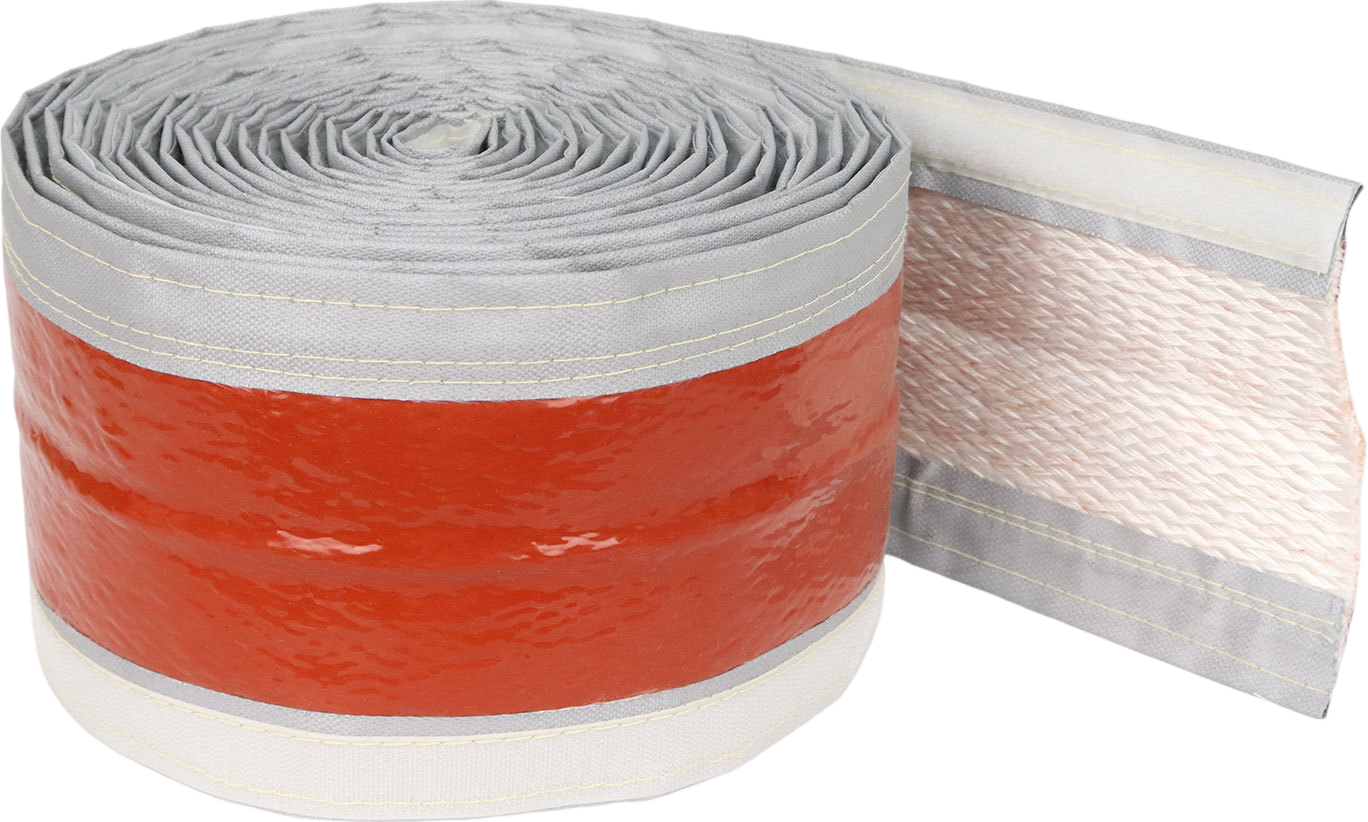
ceramic high temperature insulation protective wrapping tape 1200°c
For extreme heat environments, ceramic-based materials are the standard choice. A ceramic high temperature insulation protective wrapping tape 1200°c rating indicates the material can withstand continuous exposure at or near this threshold. Ceramic tapes are composed of amorphous silica fibers or alumina-silica fibers. They exhibit low thermal conductivity, typically between 0.10 and 0.18 W/m·K at 500°C, making them ideal for furnace door seals, kiln maintenance, and metal processing equipment.
adhesive backed high temperature insulation protective wrapping tape
Application efficiency is a key consideration for maintenance operations. An adhesive backed high temperature insulation protective wrapping tape incorporates a pressure-sensitive adhesive that remains stable at elevated temperatures. High-performance acrylic or silicone adhesives maintain bond strength up to 260°C. These tapes are commonly specified for electrical insulation in control panels, battery pack protection, and thermal management in consumer electronics manufacturing.
Comparative Analysis of High-Temperature Tape Materials
Selecting the appropriate material requires a clear understanding of performance trade-offs. The table below compares key technical parameters across the primary categories of high-temperature wrapping tapes.
| Material Type | Continuous Temp Rating | Dielectric Strength | Key Advantages | Common Limitations |
|---|---|---|---|---|
| Fiberglass with Silicone Coating | -50°C to 260°C | 400 - 600 V/mil | Flexibility, moisture resistance, electrical insulation | Limited to moderate temperature range |
| Ceramic Fiber (Silica/Alumina) | Up to 1200°C | Low (non-electrical grade) | Extreme thermal resistance, chemical inertness | Brittle, requires careful handling |
| PTFE (Polytetrafluoroethylene) | -70°C to 260°C | 300 - 500 V/mil | Chemical resistance, non-stick surface, low friction | Lower tensile strength, creep under load |
| Vermiculite-Coated Fiberglass | Up to 550°C | Not rated for electrical | Reflective surface, abrasion resistance, exhaust applications | Reduced flexibility compared to silicone |
Technical Specifications for B2B Procurement
When sourcing a High Temperature Insulation Protective Wrapping Tape, procurement professionals must verify critical technical specifications. These parameters ensure that the product meets engineering requirements and regulatory compliance standards.
Key Performance Parameters
- Continuous Operating Temperature: The maximum temperature at which the tape maintains at least 80% of its original mechanical and electrical properties over the expected service life. This is typically validated through ASTM D573 or similar accelerated aging tests.
- Dielectric Strength: Measured in volts per unit thickness according to ASTM D149. For electrical insulation applications, a minimum of 300 V/mil is standard, though critical applications often require 500 V/mil or higher.
- Tensile Strength: Expressed in pounds per inch width (PIW) or Newtons per 25mm. Minimum values typically range from 20 to 50 lbs/inch depending on the substrate thickness and construction.
- Flame Resistance: Compliance with UL 94 V-0 or FMVSS 302 standards is often required for automotive and aerospace applications. The tape must self-extinguish within specified time limits after flame exposure.
- Adhesion Strength: For adhesive-backed products, peel adhesion values (measured in ounces per inch or Newtons per 25mm) must remain stable after thermal aging. Silicone adhesives typically maintain bond integrity better than acrylic systems above 200°C.
Application Methods and Quality Considerations
Proper application technique significantly influences the performance of any High Temperature Insulation Protective Wrapping Tape. Engineers specify application parameters to ensure consistent protection.
Wrapping Techniques
For self-fusing silicone tapes, the application requires 50% overlap with tension maintained throughout the wrap. This tension activates the self-fusing mechanism. For fiberglass tapes, manufacturers recommend a minimum of 25% overlap to ensure complete coverage. In exhaust wrapping applications, the tape should be soaked in water prior to application to allow for tighter wrapping and better conformability around bends and flanges.
Frequently Asked Questions (FAQ)
1. What is the maximum continuous temperature rating for high-temperature wrapping tapes?
Continuous temperature ratings vary by material type. Silicone-coated fiberglass tapes typically withstand 260°C continuously, with intermittent exposure up to 315°C. Ceramic fiber tapes are rated for continuous service at 1000°C to 1200°C, depending on the specific fiber composition. PTFE-based tapes operate up to 260°C continuously. For applications exceeding 260°C but below 1000°C, vermiculite-coated fiberglass or ceramic fiber materials are appropriate. Engineers should always verify that the specified tape meets the maximum expected operating temperature plus a safety margin of at least 25°C.
2. How do I determine whether I need an adhesive-backed or self-fusing tape?
The choice depends on the application environment and installation requirements. Adhesive-backed tapes are suitable for flat or gently curved surfaces where the adhesive can achieve proper contact. They are easier to install but may experience adhesive degradation above 200°C. Self-fusing silicone tapes are preferred for irregular surfaces, wire bundles, and high-vibration environments. They create a seamless, moisture-resistant seal and maintain performance up to 260°C. Self-fusing tapes also conform to complex geometries more effectively than adhesive-backed alternatives.
3. What certifications should I require from a high-temperature tape supplier?
For B2B procurement, request documentation of UL recognition (specifically UL 510 for electrical insulating tapes), RoHS compliance for restricted substances, and REACH compliance for European markets. For aerospace applications, require certification to FAR 25.853 for flammability. For automotive applications, FMVSS 302 certification is standard. Additionally, request material safety data sheets (MSDS) and third-party test reports verifying temperature ratings, dielectric strength, and tensile properties as claimed by the manufacturer.
4. Can high-temperature wrapping tape be used for both thermal insulation and electrical insulation simultaneously?
Yes, but only specific grades are designed for dual-purpose applications. Silicone rubber-coated fiberglass tapes with documented dielectric strength ratings serve both functions effectively. These tapes provide thermal protection up to 260°C while maintaining electrical insulation properties. Ceramic fiber tapes, while excellent for thermal insulation, do not provide reliable electrical insulation because their fibrous structure can absorb moisture and they lack a continuous dielectric barrier. Always verify the dielectric strength rating on the technical data sheet when electrical insulation is required.
References
- ASTM International. (2024). "ASTM D149 - Standard Test Method for Dielectric Breakdown Voltage of Solid Electrical Insulating Materials." West Conshohocken: ASTM.
- Underwriters Laboratories. (2023). "UL 510 - Standard for Polyvinyl Chloride, Polyethylene, and Rubber Insulating Tape." Northbrook: UL.
- International Organization for Standardization. (2023). "ISO 2859 - Sampling procedures for inspection by attributes." Geneva: ISO.
- Society of Automotive Engineers. (2022). "SAE AS22759 - Wire and Cable, Electrical, Fluoropolymer-Insulated." Warrendale: SAE.
- Mitsui, K. & Tanaka, T. (2021). "High-Temperature Polymer Insulation Systems for Electrical Applications." IEEE Transactions on Dielectrics and Electrical Insulation, Vol. 28, Issue 4.
- Federal Aviation Administration. (2023). "FAR 25.853 - Flammability Requirements for Aircraft Cabin Materials." Washington DC: FAA.