English
 Español
 عربى
عربى

Content
Fundamental Introduction to Fiberglass Fabric
Material Composition & Manufacturing Process
Fiberglass Fabric is a high-performance technical textile made from continuous glass filaments. Manufacturers melt silica-based raw materials, draw them into fine fibers, and weave them into stable fabric structures. Most products use E-glass as the base material, which offers balanced mechanical strength and electrical insulation. The weaving process includes plain, twill, and stitched multi-axial forms to meet different industrial needs.
This fabric serves as a core reinforcement material in composites, insulation, and fire protection sectors. It supports mass production for B2B buyers with consistent quality and customizable specifications.
Core Physical & Chemical Properties
- Tensile strength ranges from 200 to 500 MPa for standard grades
- Operating temperature spans from -40°C to 870°C based on coating and glass type
- Excellent corrosion resistance to acids, alkalis, and organic solvents
- Low thermal conductivity and stable dimensional stability
- Non-flammable with self-extinguishing characteristics per ASTM standards
Five Major Types of Fiberglass Fabric
E-Glass Fiberglass Fabric for Electrical Insulation
This type is the most widely used in electronic and electrical industries. It has superior dielectric strength and low dielectric loss. It is ideal for printed circuit boards, transformer insulation, and cable wrapping. It complies with IEC 60747 standards for electronic components.
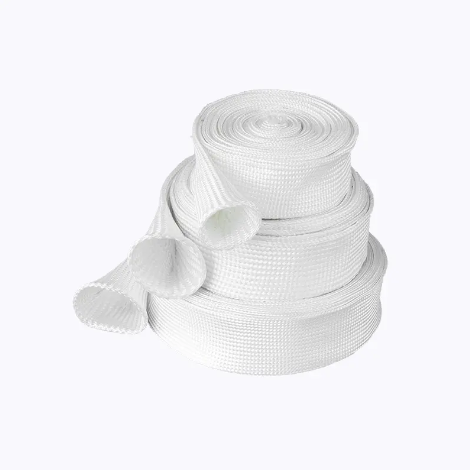
High Temperature Fiberglass Fabric for Industrial Use
Engineers use this fabric in high-heat environments such as furnace insulation, pipeline wrapping, and exhaust filtration. It retains structural integrity at continuous high temperatures and resists thermal shock. Special coatings further improve heat resistance for extreme industrial conditions.
Woven Roving Fiberglass Fabric for Composites
Woven roving features large fiber bundles for high structural strength. It has excellent resin compatibility with polyester, epoxy, and vinyl ester systems. It is widely used in marine, automotive, and wind turbine composite parts. It supports hand lay-up, compression molding, and filament winding processes.
Fire Resistant Fiberglass Fabric for Safety
This fabric meets fire safety standards for welding blankets, fire curtains, and personal protective equipment. It blocks flame spread and heat radiation effectively. It does not produce toxic fumes during combustion, making it suitable for public and industrial safety applications.
Lightweight Fiberglass Fabric for Surfacing
Lightweight variants (30g to 150g/m²) provide a smooth surface finish for composite products. They reduce air bubbles and improve appearance in boats, surfboards, and automotive parts. They offer good wet-out and compatibility with clear coating systems.
Performance Comparison of Common Fiberglass Fabric Types
Different types of Fiberglass Fabric have distinct performance indexes. The following table helps engineers and buyers make quick selection decisions.
| Fabric Type | Weight (g/m²) | Temperature Resistance | Main Application | Strength Level |
| E-Glass Insulation Fabric | 80–200 | -40°C to 250°C | Electrical & Electronics | Medium |
| High Temperature Fabric | 200–600 | -60°C to 870°C | Industrial Insulation | Medium-High |
| Woven Roving Composite Fabric | 200–1200 | -40°C to 300°C | Structural Composites | High |
| Fire Resistant Safety Fabric | 150–400 | -40°C to 550°C | Fire Protection | Medium |
| Lightweight Surfacing Fabric | 30–150 | -40°C to 200°C | Surface Finishing | Low-Medium |
B2B Procurement & Engineering Selection Standards
Specification Parameters for Bulk Purchase
Bulk buyers should confirm width (1m–2.5m), length per roll, weight tolerance, and weaving density. Custom orders allow tailored GSM, color, and surface treatment. MOQ typically ranges from 500 to 5000 square meters for wholesale channels.
Quality Inspection Criteria
- Check fiber uniformity and weaving defects such as broken filaments
- Verify tensile strength and elongation per ASTM D5035
- Test thermal stability and fire resistance per relevant standards
- Confirm resin absorption rate for composite applications
Storage & Transportation Requirements
You must store Fiberglass Fabric in dry, ventilated warehouses with humidity below 60%. You should avoid direct sunlight and mechanical damage during transit. Moisture-proof packaging extends shelf life and maintains surface treatment performance.
FAQ About Fiberglass Fabric
Q1: What is the main difference between E-glass and high-temperature Fiberglass Fabric?
A1: E-glass focuses on electrical insulation and general reinforcement. High-temperature fabric uses special glass compositions and coatings to withstand continuous heat above 500°C for industrial insulation tasks.
Q2: Can Woven Roving Fiberglass Fabric for Composites be used in marine applications?
A2: Yes, it has high strength, good water resistance, and excellent resin compatibility. It is the standard reinforcement material for boat hulls, decks, and marine composite parts.
Q3: Does Fire Resistant Fiberglass Fabric for Safety require additional treatment?
A3: Most products come with pre-coated fire-retardant treatments. They meet ASTM E84 and NFPA 701 standards without extra processing for most safety scenarios.
Q4: What is the typical lifespan of Lightweight Fiberglass Fabric for Surfacing?
A4: It has a service life of 5–10 years in indoor applications. Outdoor use may require UV-resistant coatings to extend durability to 3–5 years.
References
- ASTM International. (2023). Standard Test Methods for Woven Glass Fabrics.
- IEC 60747-1:2020. Semiconductor and Electronic Component Standards.
- Composite Materials Handbook, 4th Edition. Fiberglass Reinforcement Specifications.
- National Fire Protection Association. (2024). Flame Resistant Textile Standards.
- Industrial Textile Manufacturers Association. (2023). Fiberglass Fabric Quality Guidelines.
- International Organization for Standardization. (2024). Technical Textile Performance Requirements.