English
 Español
 عربى
عربى

Content
Hydraulic hoses are the working lifelines of industrial machinery, carrying pressurized fluid day after day in mines, factories, shipyards, and power plants. When a hose bursts, the result is downtime, repair cost, and safety risk. Most of these failures begin with abrasion - a slow wearing of the hose cover that goes unnoticed until the hose finally ruptures. Understanding what causes hydraulic hose abrasion - and how protective sleeves prevent it - is essential for every maintenance team.
What Is Hydraulic Hose Abrasion?
Hydraulic hose abrasion is the progressive removal of material from the hose outer cover due to repeated rubbing, scraping, or impact against another surface. Unlike pressure-related ruptures that happen in an instant, abrasion develops gradually and weakens the hose structure layer by layer.
The damage follows a predictable sequence:
- Scuffing and roughening of the outer protective cover
- Wear-through that exposes the reinforcement braid
- Corrosion and breakage of individual reinforcement wires
- Rupture at the weakened point under normal working pressure
The danger of abrasion is that it stays invisible until the final stage. There is no leak, no pressure drop, and no warning alarm. By the time a technician notices the damage, the hose may already be close to catastrophic failure.
Root Causes of Hydraulic Hose Abrasion
Abrasion is not random; it has specific, identifiable causes.
Mechanical Contact with Machine Structures
Hoses vibrate and flex constantly while equipment is running. When a hose is routed close to a frame, bracket, guard, or sharp metal edge, every small movement turns into friction against a hard surface. Over time, even a smooth steel plate acts like a file, wearing a concentrated groove into the hose cover.
Abrasive Particles in the Working Environment
In mines, quarries, foundries, cement plants, and shipyards, the air carries dust, sand, and metallic debris. These particles settle on the hose and embed into the outer cover. When the hose flexes or rubs against a neighboring surface, every embedded particle acts like sandpaper, dramatically accelerating wear.
Hose-to-Hose Contact
Large machines often have parallel hydraulic lines running side by side. Pressure surges and machine vibration push these hoses against one another, creating a sawing interaction that damages both covers. This is especially common in cable carriers, engine compartments, and articulated equipment.
Improper Routing and Clamping
Hoses that are routed too tightly, supported over long spans, or secured by sharp-edged clamps face unnatural mechanical stress. Excessive tension pulls the hose against mounting points, while an incorrect bend radius forces it into hard contact with clamp edges, producing wear in the most difficult places to inspect.
Heat-Accelerated Cover Degradation
Heat from engines, exhaust manifolds, furnaces, or molten material softens the rubber cover and lowers its abrasion resistance. Thermal expansion and contraction also generate micro-movements, producing friction even in static-looking installations. Heat and abrasion compound each other: a weakened cover wears faster, and faster wear generates more local heat.
The Real Cost of Catastrophic Hose Failure
When abrasion finally breaks through the reinforcement layer, the hose usually bursts rather than leaking slowly. Pressurized fluid escapes in a fraction of a second at high velocity, creating immediate safety hazards and hidden damage that spreads far beyond the hose itself.
Abrasion never announces itself. It works silently for months, and the first sign of trouble is often the burst itself - by then, the cost has already been counted.
How Protective Sleeves Prevent Abrasion Damage
A protective sleeve is a tubular cover made from woven high-temperature fiber. It slides over the hydraulic hose and acts as a removable shield between the hose and the source of friction. These sleeves are available in fiberglass, basalt fiber, high-silica fiber, ceramic fiber, and aluminum-foil composite constructions to cover a wide range of operating conditions.
The woven structure of a sleeve spreads concentrated friction over a larger surface area, reducing the intensity of wear on the hose cover. The sleeve also absorbs the impact of scrapes, cuts, and fast-moving debris that would otherwise score the hose. When the sleeve becomes worn, replacing it costs a small fraction of the price of a hydraulic hose.
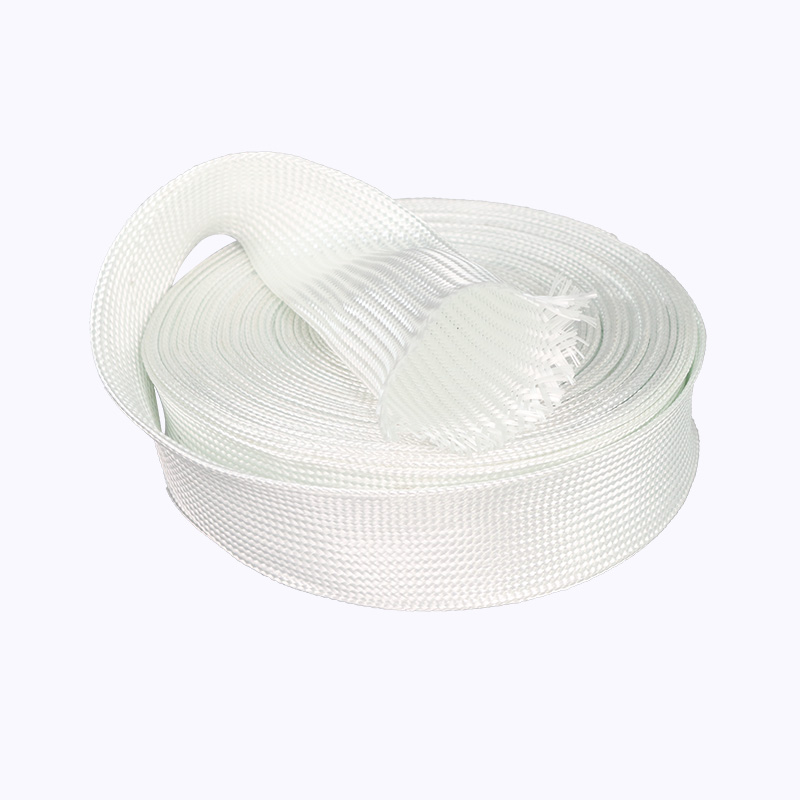 Fiberglass SleevePART NO. INNER DIAMETER/mm THICKNESS ROLL LENGTH/m Wrap m/ctn ZDGF-S-010 10 0.8 50 100 ZDGF--S-012 12 10 50 100 ZDGF--S-015 15 1.2 50 100 ZDGF--S-020 20 1.4 50 100 ZDG...View Product →
Fiberglass sleeving is the most widely used starting point for general abrasion and heat protection. It is flexible, lightweight, and delivers an excellent mix of durability and economy. For more demanding environments, basalt fiber sleeving offers superior wear resistance - especially in humid, salt-air, or debris-heavy conditions - while high-silica and ceramic fibers serve extreme-temperature zones.
In addition to mechanical protection, a protective sleeve supports overall system reliability in several other ways:
- Thermal insulation: reduces heat transfer from hot surfaces into the hose
- Flame retardancy: lowers fire risk near engines, exhausts, and hot manifolds
- Weather and chemical resistance: protects the hose cover from oil, fuel, UV, and outdoor aging
- Moisture control: breathable knit constructions avoid trapping corrosive water against the hose
Selecting the Right Protective Sleeve
Choosing the right sleeve means matching the material construction to the operating environment. The table below summarizes the main product groups and their typical applications.
| Material Type | Best Application | Key Advantage |
|---|---|---|
| Fiberglass sleeve | General industrial lines with moderate heat and friction | Balanced protection at a low cost |
| Basalt fiber sleeve | Mining, marine, and heavy-equipment environments | Excellent wear resistance and moisture tolerance |
| High-silica fiber sleeve | Zones near exhausts, furnaces, and turbines | Very high temperature ceiling |
| Aluminum-foil composite sleeve | Radiant heat and molten splash areas | Reflective insulation with an added wear barrier |
Consider the maximum contact temperature, friction intensity, chemical exposure, and the flexibility required by machine movement. A knitted sleeve follows the motion of a flexing hose, while a tightly woven sleeve provides the greatest cut resistance.
In mining and marine applications, basalt fiber sleeving has become a preferred choice because it combines outstanding durability with high moisture tolerance, protecting steel-reinforced hoses in the most corrosive settings.
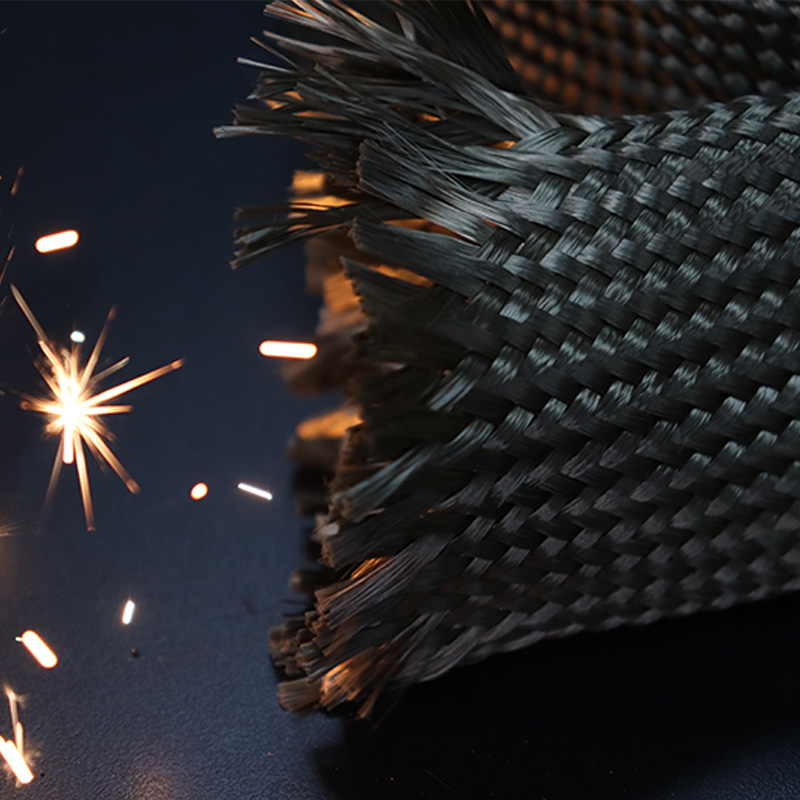 Basalt Fiber SleeveProduct IntroductionView Product →
When ambient temperatures exceed the practical limits of standard sleeve materials, high-silica fiber sleeving offers a much higher heat ceiling and remains stable even in intense radiant-heat zones near furnaces, turbines, and exhaust systems.
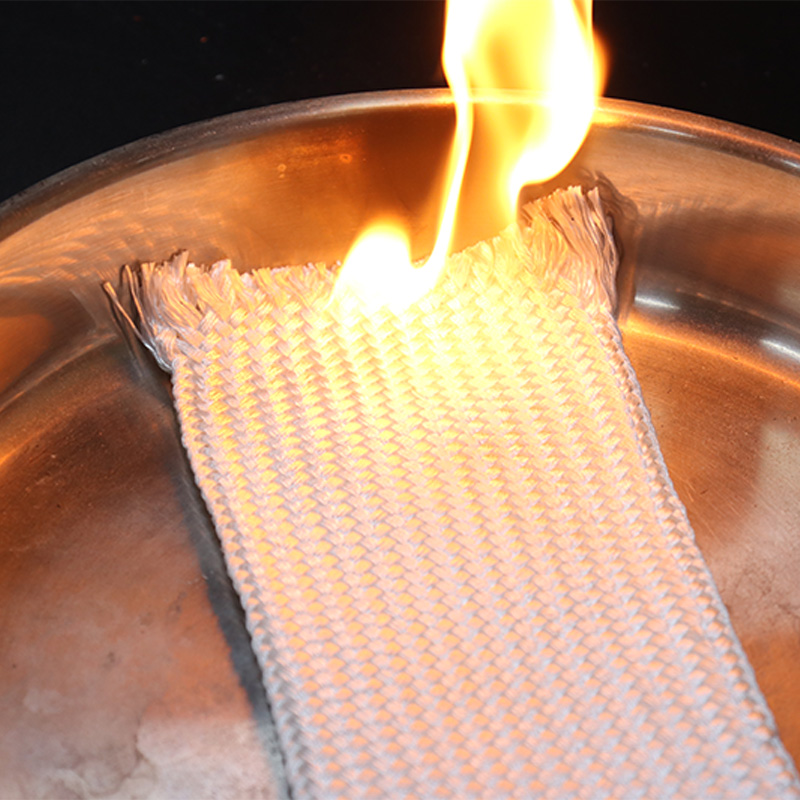 High Silica Fiber SleevePART NO. INNER DIAMETER/mm WALL THICKNESS/mm WEIGHT (g/m 2 )View Product →
For most installations, the simplest approach is to begin with a general-purpose fiberglass sleeve and upgrade only the zones that show accelerated wear. A reliable high-temperature protection solution must address both thermal and mechanical stress, and our guide on how to choose a reliable high-temperature protection solution covers the complete selection process step by step.
Installation Best Practices
Even the best protective sleeve will fail early if it is installed incorrectly. These habits prevent the most common mistakes:
- Measure generously: add roughly 15% extra length to cover bends, fittings, and hose movement.
- Anchor both ends: secure the sleeve with high-temperature ties or clamps so it cannot slide away from the wear zone.
- Overlap wrap-type products: when using self-adhesive or spiral wrapping tape, overlap each pass by half the tape width so no gap remains.
- Fix routing problems first: if a hose rubs because of poor layout, correct the routing before adding protection.
- Inspect sleeves during routine maintenance: replace a sleeve that shows deep scoring or fraying before the hose underneath is damaged.
Frequently Asked Questions
Q1: How do I know if my hydraulic hose is already suffering from abrasion?
Inspect the hose at every point where it touches a bracket, frame, or adjacent hose. Look for scuffed, dull, or rough patches and fine longitudinal scratches. If the reinforcement braid is visible through the cover, the hose is already at high risk and should be replaced before it bursts.
Q2: Can the same protective sleeve handle both abrasion and extreme heat?
Yes. Fiber-based sleeves such as fiberglass, basalt, and high-silica types are designed for both mechanical wear and thermal insulation. Each material has a different limit, so the sleeve should be selected based on the most severe condition in the application.
Q3: Will a protective sleeve reduce the flexibility of the hydraulic hose?
Not significantly. Knitted and braided sleeves flex together with the hose and do not restrict normal movement. If a hose flexes a great deal, choose a knitted construction and select a sleeve diameter slightly larger than the hose outer diameter.
Q4: How often should protective sleeves be replaced?
The interval depends on the harshness of the environment. As a general guideline, inspect sleeves every three to six months and replace them when deep scoring, frayed fibers, or visible thinning appears. Replacing a worn sleeve is fast and inexpensive; waiting too long defeats the entire purpose of the protection.
Final Thoughts
Hydraulic hose abrasion is neither random nor unavoidable. It has identifiable causes - mechanical contact, abrasive particles, hose-to-hose friction, poor routing, and heat-accelerated wear - and each one can be neutralized with a well-designed protective sleeve.
The economics are simple: a sleeve costs a few dollars, while a burst hose costs hours of downtime, the risk of injury, and the expense of emergency repair. Ningguo Zhongdian Insulation Material Co., Ltd. offers a comprehensive range of high-temperature resistant sleeves, fabrics, and wrapping tapes engineered for this exact purpose. Choosing the right protection is not an extra expense; it is the cheapest insurance your hydraulic system will ever have.