English
 Español
 عربى
عربى

Content
- 1 Why Sleeve Material Choice Matters Above 800°C
- 2 High Silica Fiber Sleeve: Performance and Cost Balance
- 3 Quartz Fiber Sleeve: Maximum Thermal and Electrical Margin
- 4 High Silica vs. Quartz Fiber Sleeve: Key Differences at a Glance
- 5 Selecting the Right Sleeve for Your Application
- 6 Installation and Maintenance Practices
- 7 Frequently Asked Questions
- 7.0.1 Q1: Can a high silica fiber sleeve replace a quartz fiber sleeve in every application?
- 7.0.2 Q2: Do these sleeves remain electrically insulating at high temperatures?
- 7.0.3 Q3: Are the sleeves resistant to open flame and molten metal splash?
- 7.0.4 Q4: How do I determine the required inner diameter?
Steel plants, glass furnaces, and petrochemical lines share one serious threat: sustained radiant heat that destroys standard cable insulation within minutes. Once operating temperatures push beyond the limits of ordinary fiberglass, fabricators look for materials that remain mechanically intact above 800°C. Two solutions consistently stand out: high silica fiber sleeves and quartz fiber sleeves. Although both belong to the amorphous silica fiber family, differences in purity create meaningful trade-offs in thermal resistance, electrical stability, mechanical flexibility, and cost. This guide compares both options so you can select the right ultra-high-temperature cable protection with confidence.
Why Sleeve Material Choice Matters Above 800°C
When a cable or hose is exposed to repeated thermal cycling above 800°C, three failure modes appear. The first is embrittlement, in which ordinary E-glass fibers lose tensile strength and begin to crack under vibration. The second is dielectric breakdown, because degraded insulation no longer blocks leakage current. The third is thermal shrinkage, which exposes bare conductors at poorly closed terminations.
High-purity silica-based textiles counteract all three failure modes because the SiO2 network stays structurally stable at temperatures where silicate glass fibers soften. Both the high silica fiber sleeve and the quartz fiber sleeve discussed here are inorganic textiles; they do not melt, drip, or generate smoke when exposed to open flame. The meaningful divergence starts with raw material purity. A high silica fiber is typically produced by leaching ordinary glass fiber to raise silica content to around 96%. Quartz fiber starts from high-purity crystalline quartz and is drawn directly into continuous filament, reaching a silica content above 99.9%.
High Silica Fiber Sleeve: Performance and Cost Balance
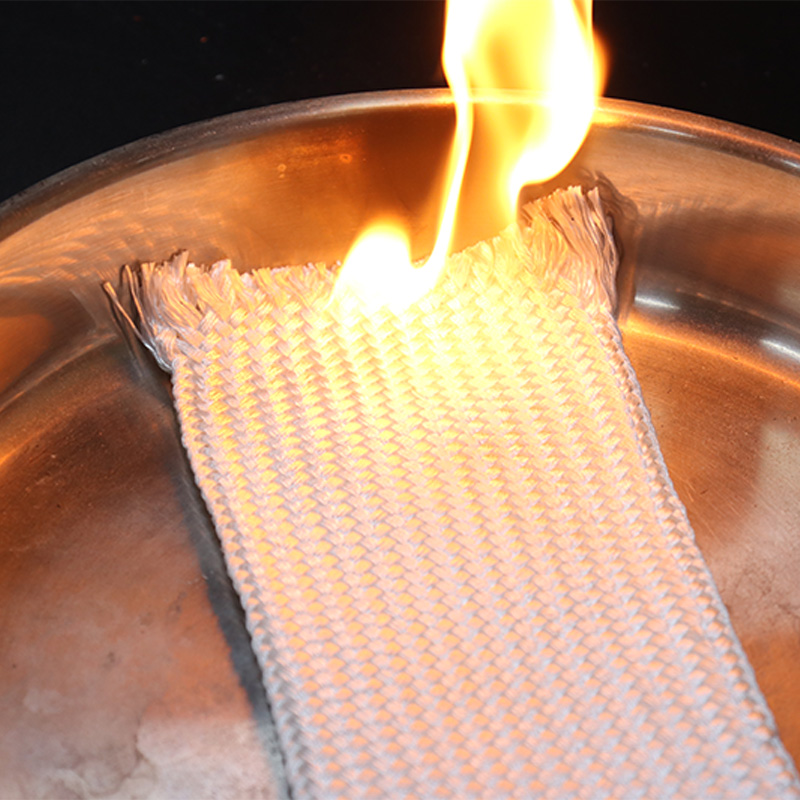 High Silica Fiber Sleeve for High-Temperature Protection of Pipes and CablesThis braided sleeve made from leached silica yarn offers flexible, fire-resistant insulation for hoses, cables, and exhaust systems, with continuous service up to 1000°C and short-term peaks around 1300°C, ideal for industrial plants.View Product →
For most industrial plants, the high silica fiber sleeve is the first option to evaluate. Ningguo Zhongdian's high silica fiber sleeve is manufactured from leached silica yarn that keeps the flexibility of a textile while resisting radiant heat, molten metal spatter, and thermal shock. It provides long-term continuous service at temperatures up to 1000°C, with short-term peak exposure around 1300°C without melting through.
Because the thermal conductivity of the material stays low, less heat is transferred from the external flame or heat source to the protected cable core. This makes the sleeve effective in steel plants, welding stations, kilns, and exhaust lines where temperatures fluctuate and physical abuse is common. The cost is noticeably lower than quartz, so maintenance teams can protect long cable runs without exceeding budget limits. The strong industrial adoption of high silica fiber protection is examined in more detail in our related material guide.
Rule of thumb If your continuous operating temperature stays below 1000°C and your priority is a cost-effective balance of heat resistance, flexibility, and availability, the high silica fiber sleeve is the rational default.
Quartz Fiber Sleeve: Maximum Thermal and Electrical Margin
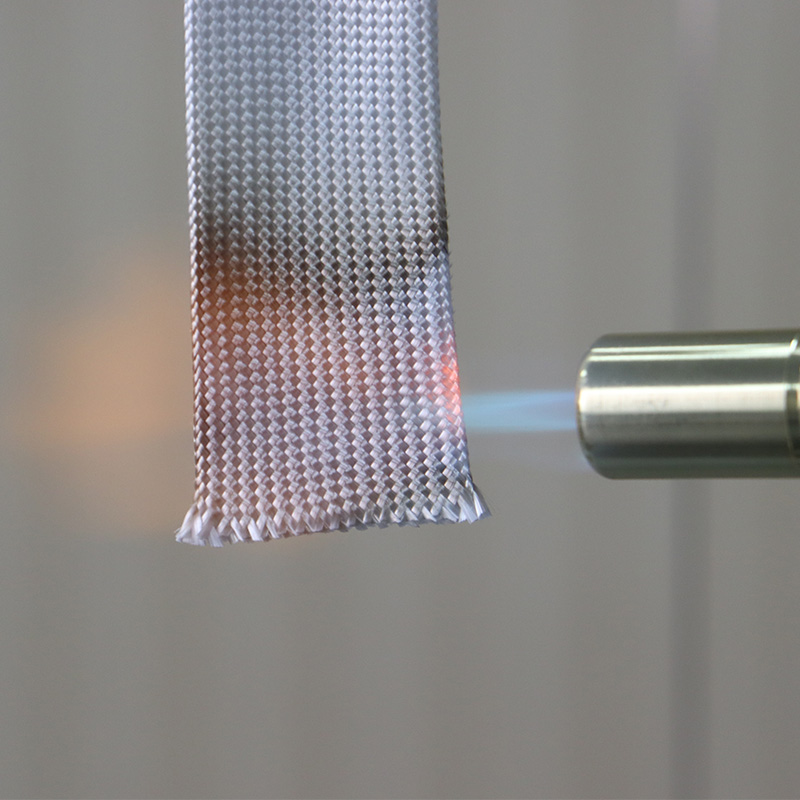 Quartz Fiber Sleeve with Ultra-High Purity for Extreme Heat and Electrical InsulationManufactured from continuous quartz filament with over 99.9% silica, this sleeve provides superior thermal stability and low dielectric loss, suiting aerospace, semiconductor, and high-temperature filtration applications where purity matters.View Product →
When process temperatures are extreme, or when electrical insulation properties cannot be compromised, the quartz fiber sleeve becomes the reference material. A quartz fiber sleeve produced from high-purity continuous quartz filament provides continuous service at about 1200°C and can tolerate short peaks close to the softening point of roughly 1700°C. Because the silica content exceeds 99.9 percent, far fewer impurities are present to lower thermal stability or create conductive paths under high voltage.
This purity also gives quartz fiber superior dielectric behavior at high temperatures. In induction furnace wiring, aluminum melting operations, and aerospace ground support equipment, the electrical performance of quartz fiber sleeving remains stable where standard fiberglass insulation cannot. The trade-off is price: quartz fiber costs considerably more than high silica fiber, so it is usually specified when safety margins override budget sensitivity.
Note If your process operates at or above 1100°C for extended periods, a high silica sleeve will age quickly and quartz is the safer specification.
High Silica vs. Quartz Fiber Sleeve: Key Differences at a Glance
The table below summarizes the main parameters that influence material selection.
| Parameter | High Silica Fiber Sleeve | Quartz Fiber Sleeve |
|---|---|---|
| Silica content | ≥ 96% | ≥ 99.9% |
| Continuous service temperature | up to 1000°C | up to 1200°C |
| Peak exposure limit | around 1300°C | close to 1700°C |
| Thermal shock resistance | Excellent | Superior |
| High-temperature dielectric stability | Good | Excellent |
| Mechanical flexibility | Good, braided fabric | Good, continuous filament |
| Relative cost | Lower | Higher |
| Typical industries | Steel, glass, ceramics, automotive | Aerospace, aluminum, semiconductor, power |
Read the table together with your own working conditions rather than relying on maximum ratings alone, because continuous exposure near the upper limit will shorten the lifetime of any textile sleeve.
Selecting the Right Sleeve for Your Application
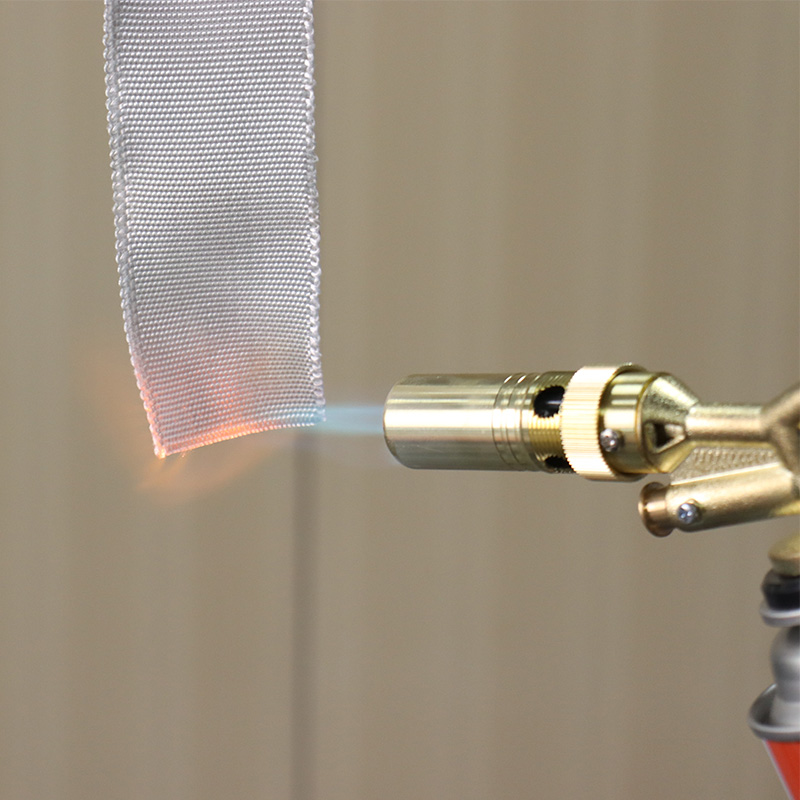 High Silica Wrap Tape for Sealing, Insulation, and Filtration in High-Temperature SystemsWoven from high silica yarn with at least 96% silica, this tape offers good electrical insulation, low thermal conductivity, and continuous heat resistance to 1000°C, making it versatile for furnace sealing, filtration, and exhaust insulation.View Product →
Selection should follow the real working conditions rather than a generic temperature class. Use the following steps and the comparison table above as a checklist.
Step 1: Define the Continuous Temperature
Measure the temperature at the cable surface itself, not the furnace or equipment temperature. Radiant shielding, airflow, and distance from the heat source all affect the temperature the sleeve actually sees.
Step 2: Check Exposure Duration and Cycling
Short process spikes can be handled by either material, but sustained operation near the maximum temperature rating will accelerate fiber embrittlement and reduce service life.
Step 3: Evaluate Mechanical Loads
Sharp edges, vibration, and repeated flexing require a dense braid and a correctly sized inner diameter that keeps the sleeve from sliding along the cable.
Step 4: Confirm Electrical Requirements
For high-voltage or frequency-sensitive applications, quartz offers superior insulation stability at high temperature.
In general, select the high silica fiber sleeve when the continuous temperature is at or below 1000°C and cost efficiency matters. Select the quartz fiber sleeve when the process runs above 1100°C, when the thermal margin must remain generous, or when electrical stability is critical. For cable bundles that pass through junction boxes or around irregular fittings, the same material family is available as high silica wrap tape to reinforce transitions and terminations.
Installation and Maintenance Practices
Both sleeve types are braided textiles, so they share a set of good installation habits.
- Choose an inner diameter slightly larger than the maximum bundle diameter so the sleeve slides over the cable without stretching.
- Use sharp scissors or a hot knife to cut the sleeve; seal the cut ends with silicone or wrap tape to prevent progressive unravelling.
- Secure both ends with stainless steel ties or clamps, especially on vertically installed cables.
- Inspect sleeves during routine maintenance for frayed filaments, discoloration, or mechanical wear near support points.
- Replace sections that show broken yarns before bare conductors become exposed.
Frequently Asked Questions
Q1: Can a high silica fiber sleeve replace a quartz fiber sleeve in every application?
No. If the original quartz specification was driven by continuous temperatures above 1100°C, a high silica sleeve will age prematurely. If the real continuous temperature is below 1000°C with comfortable margins, high silica can be a cost-effective substitution.
Q2: Do these sleeves remain electrically insulating at high temperatures?
Yes. Both are dielectric, inorganic textiles with high volume resistivity. Quartz maintains more stable insulation performance after long heat exposure because its higher purity minimizes conductive contaminations.
Q3: Are the sleeves resistant to open flame and molten metal splash?
Both materials do not ignite or produce smoke when exposed to flame. Concentrated molten metal splash can gradually erode the braided structure, so a dense braid should be selected for foundry applications.
Q4: How do I determine the required inner diameter?
Measure the cable bundle after all conductors are installed, then select a standard inner diameter that allows insertion without force but does not leave excessive clearance. The product pages from Ningguo Zhongdian list available diameter options for both sleeve types.
High silica and quartz fiber sleeves both represent the top tier of ultra-high-temperature cable protection, but they answer different engineering priorities. High silica delivers a pragmatic balance of thermal resistance, flexibility, and cost for continuous service near 1000°C. Quartz delivers the maximum temperature margin and the most stable electrical insulation for the most demanding industrial environments. Review the temperature profile, mechanical stress, and electrical requirements of your application before deciding. A well-informed material selection will protect critical cables for the full service life of the equipment.