English
 Español
 عربى

Content
- 1 Why Corrosive Chemicals and Fire Form a Combined Threat
- 2 Core Requirements for Sleeves in Corrosive and Fire-Prone Zones
- 3 Comparing Fiber Materials: Chemical Resistance Meets Heat Rating
- 4 Sleeve Formats: Matching Protection to Plant Layout
- 5 Installation and Maintenance Best Practices
- 6 Frequently Asked Questions
- 7 Building a Durable Fire Protection Strategy
Chemical processing plants are among the most demanding environments for fire protection. Process lines carry flammable and corrosive media side by side, equipment surfaces run at extreme temperatures, and a single leak can create a toxic, flammable cloud. Protective sleeving for hoses, cables, and pipes must therefore do double duty: resist direct flame and radiant heat while standing up to acids, alkalis, and solvents that would quickly destroy ordinary materials.
Choosing the wrong fire-resistant sleeve can turn a minor incident into a major disaster. The right sleeve, by contrast, can mean the difference between a contained emergency and a catastrophic loss.
This guide explains how to evaluate sleeves for chemical plant fire protection, which materials resist both corrosion and heat, and how to match protection formats to the real conditions on your site.
Why Corrosive Chemicals and Fire Form a Combined Threat
Fire protection in a chemical processing plant is rarely a single-source problem. A sleeve may be installed near a steam line that runs at 400 °C, then splashed with sulfuric acid during routine cleaning, and later exposed to a flash fire caused by a solvent vapor leak. Each exposure on its own might not destroy the sleeve; the real danger lies in how the threats interact.
Corrosive chemicals attack the sleeve material progressively. They can weaken glass or mineral fibers, dissolve protective coatings, and break down the stitching or braiding that gives the sleeve its strength. When a fire subsequently subjects the material to extreme heat, the weakened sleeve can crack, shrink, or melt through, exposing the very cables and hoses it was designed to protect. Over time, even low concentrations of chemicals create stress points where thermal failure begins.
Operators should therefore treat chemical resistance and fire resistance as inseparable requirements. A sleeve that only meets one of them is an incomplete solution. Read more about fire-retardant sleeves in petrochemical safety systems to see how these products perform in real facilities.
Core Requirements for Sleeves in Corrosive and Fire-Prone Zones
Before selecting a product, define the performance envelope your plant actually needs. The following requirements form a useful checklist for evaluation:
- Thermal resistance: The sleeve must tolerate continuous operating temperatures and survive short flame bursts without melting or burning through.
- Chemical resistance: The fiber and any coating must resist the specific acids, alkalis, or solvents present in your process environment.
- Mechanical integrity: The sleeve must stay flexible and strong after repeated heat and chemical exposure so it continues to protect hoses and cables.
- Certification: Look for products tested to recognized flame-retardant standards and verified for environmental compliance.
Certifications such as UL flame ratings, CE marking, and RoHS compliance provide a documented baseline, but plant-specific chemical compatibility should always be confirmed with the material data sheets before installation.
Comparing Fiber Materials: Chemical Resistance Meets Heat Rating
Not all fire-resistant fibers cope with chemical attack equally. Choosing the right material means balancing continuous temperature rating, chemical stability, mechanical toughness, and cost. The table below compares the most common sleeve fibers used in chemical plants.
| Fiber type | Max continuous temp | Chemical resistance | Mechanical strength | Ideal application |
|---|---|---|---|---|
| Fiberglass | ~550 °C | Moderate; affected by strong acids and moisture | Good tensile strength | General industrial protection |
| High silica | ~1,000 °C | Excellent against most acids and alkalis | Strong and flexible | Chemical process lines and high-heat zones |
| Ceramic | ~1,260 °C | Excellent chemical inertness | Lower tensile strength; needs outer protection | Extreme hot spots |
| Basalt | ~700 °C | Good resistance to acids and alkalis | High mechanical strength | Humid or mildly corrosive areas |
| Quartz | Above 1,000 °C | Outstanding chemical resistance | Fragile; higher cost | Specialized high-temperature electrical insulation |
High silica fiber is often the most balanced option for chemical plant service. It combines a high temperature ceiling with strong resistance to most industrial chemicals while retaining better flexibility than ceramic fiber. For extreme hot spots above 1,000 °C, ceramic fiber sleeves offer the maximum thermal headroom. In humid but less aggressive environments, basalt provides a durable, cost-effective alternative. To choose confidently, explore our full range of high-temperature protective materials and compare the options side by side.
Sleeve Formats: Matching Protection to Plant Layout
Chemical plants contain many different component geometries. Straight pipe runs, flexible hoses, bundled cables, flanges, and complex valve bodies all need protection, but the best format differs from one location to the next.
Sleeves for continuous line protection
Braided and woven sleeves provide 360-degree coverage for hoses, wires, and cable bundles. Their flexibility allows them to absorb vibration and thermal expansion, which makes them the first choice for lines that move during operation or require frequent disconnection. High silica versions extend this performance across the chemical plant temperature range while resisting corrosive attack.
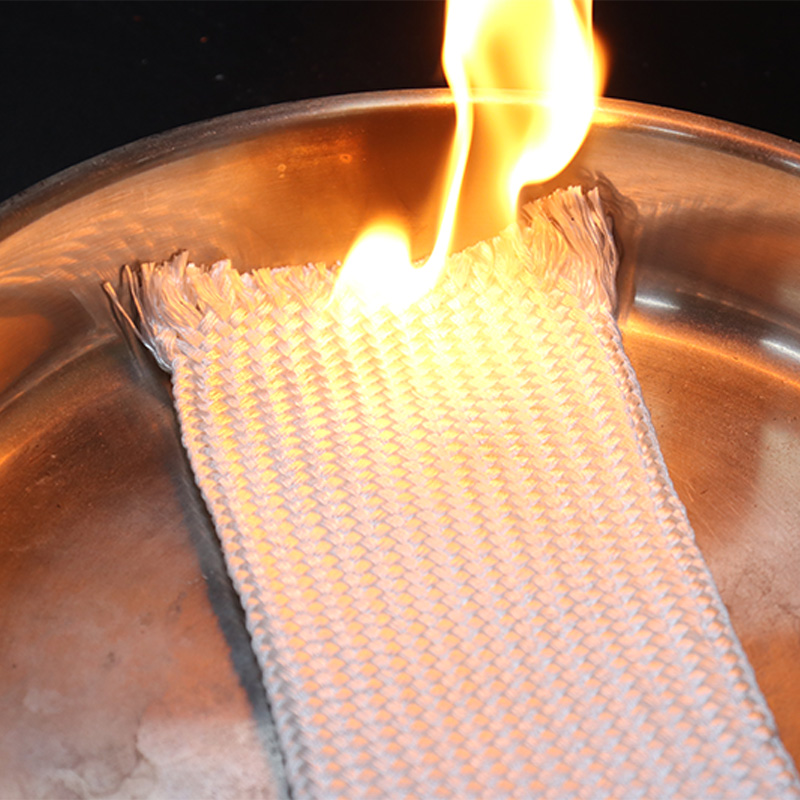 High Silica Fiber Braided Sleeve for Extreme Heat ProtectionThis braided sleeve is made from high-silica oxygen fiber yarns, rated for continuous use at 1000°C. It suits irregularly shaped hoses and cables where straight sleeves cannot fit, offering flexible protection against heat and flame.View Product →
Wrap tapes for irregular components
Spiral wrap tapes and winding belts cover valves, flanges, and other irregular shapes that cannot be fitted with a straight sleeve. They wrap tightly around the component and can be trimmed to the exact length required, which simplifies installation on existing equipment. Ceramic fiber winding belts are particularly effective where surface temperatures reach extreme levels.
 Ceramic Fiber Winding Tape for High-Temperature Piping InsulationThis woven winding tape uses aluminosilicate refractory fibers reinforced with glass or stainless steel wire, rated up to 1000°C. It is ideal for wrapping valves, flanges, and other irregular components on existing equipment, reducing surface temperatures and preventing burns.View Product →
Openable and self-adhesive options for fast retrofits
When a line must be protected without downtime, self-adhesive tapes offer the fastest solution. They can be applied directly to hoses and cables on site, and the adhesive layer holds the tape in place while still allowing the material to flex with the equipment.
For plants that need protection on already-connected lines, openable formats such as velcro-closed sleeves and clip-on casings allow installation without breaking process connections, which is a significant advantage in continuous operations.
Installation and Maintenance Best Practices
A well-chosen sleeve only delivers its full protection when installed correctly and inspected regularly. The following practices help extend service life and maintain fire resistance.
- Measure precisely: Mark the sleeve length before cutting and allow extra overlap at joints so no segment of cable or hose remains exposed.
- Overlap spiral wraps correctly: When using wrap tapes, overlap each turn by at least 50 percent to create a continuous barrier against both heat and chemical ingress.
- Secure the ends: Fasten both ends of the sleeve or tape so vibration and thermal cycling cannot work them loose over time.
- Inspect on a regular schedule: Check for signs of chemical discoloration, brittleness, abrasion, or delamination during routine maintenance rounds.
- Replace damaged protection immediately: A chafed or cracked sleeve cannot restore its own performance; replace it before the underlying line is exposed.
Self-adhesive tapes are especially useful for quick repairs and retrofits because they can be applied without special tools. Keep a stock of the same material used throughout the plant so replacements match the original specification.
 High Silica Self-Adhesive Tape for Quick High-Heat RepairsThis tape features a pressure-sensitive adhesive backing for fast application without tools, and is made from 96% pure silica fiber. It withstands continuous temperatures above 1000°C, making it a practical choice for retrofitting complex pipes or cables in demanding environments.View Product →
Frequently Asked Questions
Q1: What temperature can high silica fiber sleeves withstand?
High silica fiber sleeves generally withstand continuous operating temperatures of about 1,000 °C, with short-term exposure to even higher temperatures during flame contact. This makes them suitable for most chemical plant fire protection zones.
Q2: Are ceramic fiber sleeves suitable for corrosive chemical environments?
Yes. Ceramic fibers are chemically inert and resist most acids and alkalis. However, their tensile strength is lower than that of glass or basalt fibers, so they should be protected from mechanical abrasion or used where physical wear is minimal.
Q3: Can these sleeves be installed without shutting down the process?
In most cases, yes. Self-adhesive tapes and spiral wrap tapes can be applied to existing lines without disconnecting them, while velcro-closed sleeves and clip-on casings allow quick fitting over already-installed hoses and cables.
Building a Durable Fire Protection Strategy
Selecting the right fire-resistant sleeve for a chemical processing plant requires more than comparing temperature ratings. Corrosive chemicals can silently degrade a material until it no longer performs, turning a well-designed safety system into a false sense of security. High silica, ceramic, and basalt fiber products each bring different strengths, and matching those strengths to the actual chemicals, temperatures, and mechanical conditions on site is the most reliable path to durable protection.
Start with a clear audit of your plant: identify the hottest surfaces, the most aggressive chemical exposures, and the components that are hardest to replace. Then choose a sleeve format and material that fits the real conditions. With the right selection, installation, and maintenance, your fire protection system can stand up to both fire and chemistry for years of safe operation.