English
 Español
 عربى

Content
- 1 Why Turbo Heat Retention Matters
- 2 What Are Custom Formed Thermal Jackets?
- 3 What Is Standard Wrapping?
- 4 Custom Formed Thermal Jackets vs. Standard Wrapping: Comparison Table
- 5 Which Provides Superior Turbo Heat Retention?
- 6 Installation and Maintenance Considerations
- 7 Frequently Asked Questions
- 8 Final Verdict
Turbochargers operate under extreme heat and pressure. Exhaust gas temperatures in modern diesel engines can easily reach 800 degrees Celsius, and in performance petrol engines the thermal load is just as demanding. If that heat escapes before it reaches the turbine, the engine loses response, the turbocharger has to work harder, and surrounding components suffer from radiant heat damage. Engineers and vehicle builders have two main strategies to control this heat: custom formed thermal jackets and standard wrapping. Both are designed to hold heat inside the exhaust system, but they are not identical in fit, durability, or final performance.
This article looks at the differences between custom formed thermal jackets and standard wrapping, and explains which approach provides superior turbo heat retention in real-world installations.
Why Turbo Heat Retention Matters
Heat retention is not about making the turbocharger hotter in a harmful way. It is about keeping exhaust gas energy concentrated so that the turbine can extract more useful work from the same combustion event. A well-insulated hot side also reduces under-hood temperatures, protects nearby wiring, hoses, and actuators, and lowers the risk of heat soak after shutdown.
When you compare thermal jackets and wrapping, the first point to understand is that turbocharger insulation performance is largely determined by three variables: material thermal resistance, thickness, and how completely the insulation surrounds the hot surface. Custom formed thermal jackets and standard wrapping both use high-temperature fibers such as basalt, ceramic, fiberglass, or high-silica cloth. The real difference appears in how well each method conforms to complex turbocharger geometry.
Key point: a small gap or exposed flange can become a major heat-loss point. Coverage continuity is often more important than the raw temperature rating of the insulation material.
What Are Custom Formed Thermal Jackets?
A custom formed thermal jacket is a pre-shaped insulation cover designed around a specific turbocharger or exhaust component. It is usually made from layered high-temperature fabrics, with an inner insulation layer, a mid-layer of ceramic or basalt cloth, and an outer shell that may include aluminum foil or silicone-coated fabric. The jacket is cut and sewn to match the contours of the turbo housing, wastegate, actuator, or nearby lines.
The main benefit of a custom formed jacket is fit. Because it is shaped for a specific component, it can cover tight radii, sensor bosses, and irregular surfaces without leaving gaps. The jacket holds its position, which means heat retention remains consistent even under vibration and repeated heating and cooling cycles. Many jackets are also designed for repeated removal and reinstallation, which makes maintenance easier.
 Custom-Formed Turbocharger Heat Shield CoverThis pre-formed turbocharger cover uses layered silica insulation and stainless steel fasteners to contain exhaust heat, protecting nearby hoses, wires, and painted surfaces while maintaining consistent thermal performance.View Product →
For turbocharger housings in particular, a formed cover is often the most reliable way to contain heat. A flexible wrap can slide or loosen over time; a correctly fitted jacket remains in contact with the surface and traps a stable layer of insulating air inside its structure.
What Is Standard Wrapping?
Standard wrapping uses flexible insulation tape or cloth that is wound around exhaust pipes, manifolds, and turbocharger hot parts. The most common forms are exhaust wrap tapes made from fiberglass, basalt, ceramic, or high-silica fiber, and self-adhesive wraps designed for quick installation. Wrapping is a simple and cost-effective way to add a thermal barrier to straight pipes and manifold runners.
Wrapping is popular because it can be cut to length on site and applied to almost any geometry. For anyone looking for dependable products, the manufacturer’s range of high-temperature insulation materials covers both wrapped and pre-formed solutions. However, the quality of the result depends strongly on installation skill. Overlapping layers must be even, tension must be consistent, and edges must be sealed with stainless steel ties or high-temperature tape to prevent unwinding.
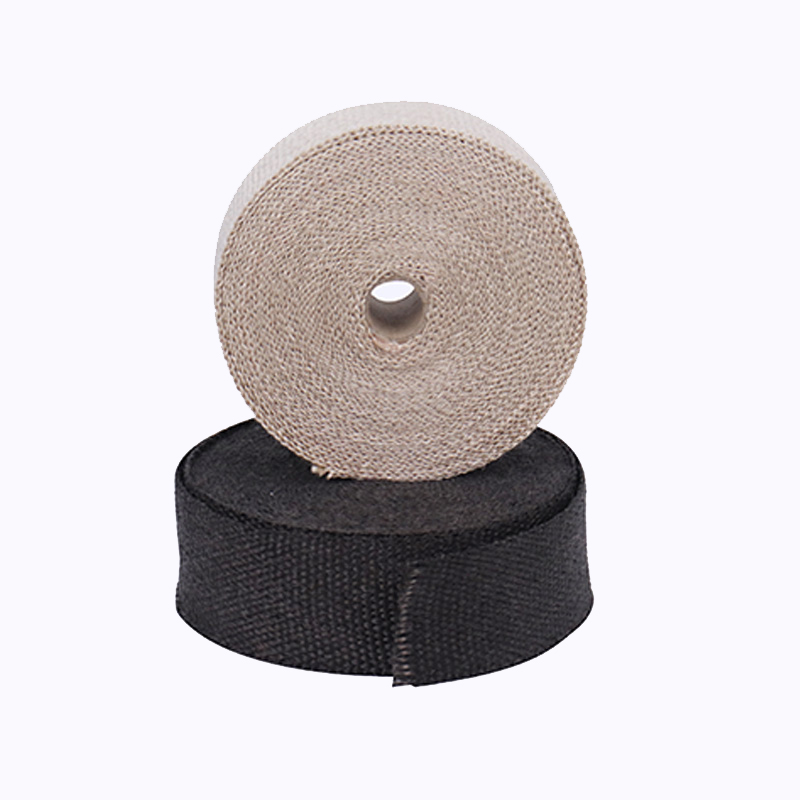 High-Temperature Fiberglass Exhaust Insulating WrapThis flexible fiberglass tape provides electrical and thermal insulation for exhaust pipes, wiring, and ducts, with a continuous rating of 550°C and easy on-site cutting for complex geometries.View Product →
Standard wrapping is ideal for long pipe runs and manifold branches. On a turbocharger housing, the complex shape makes it difficult to achieve the same level of continuous coverage with a flat tape, because creases and open joints tend to form at tight radii.
Custom Formed Thermal Jackets vs. Standard Wrapping: Comparison Table
The table below summarizes the main differences between the two thermal protection strategies.
| Factor | Custom Formed Thermal Jackets | Standard Wrapping |
|---|---|---|
| Fit | Pre-shaped for exact component contours | Conforms manually but may leave gaps |
| Heat retention | High and consistent | Good on straight pipes, variable on complex shapes |
| Installation | Slip-on after initial fitting | Requires careful overlapping and tensioning |
| Durability | Secure, resistant to vibration | Depends on edge sealing and exposure |
| Removal | Quick and repeatable | More difficult if tied or sealed |
| Weight | Usually heavier | Lighter per area |
| Cost | Higher initial cost | Lower material cost |
| Best use | Turbocharger housing, complex hot components | Exhaust pipes, manifolds, long ducts |
Which Provides Superior Turbo Heat Retention?
For the turbocharger housing itself, custom formed thermal jackets generally provide superior heat retention. The reason is simple: a formed jacket creates a complete three-dimensional insulation envelope around the turbo. It holds the insulation layer tightly against the housing, reduces convective airflow at the surface, and prevents the common gaps that appear when tape is wrapped around a sharp corner.
When a Custom Formed Jacket Is the Better Choice
If the goal is maximum heat retention at the turbocharger, a custom jacket is the better option. It is especially valuable in high-performance tuning, marine engines, generator sets, and heavy-duty trucks where turbo response and under-hood temperatures are critical. The jacket can also include cutouts for oil lines, boost lines, and actuators, which means those components stay cool while the hot housing remains insulated.
When Standard Wrapping Is Enough
Standard wrapping is still a very effective solution for exhaust manifolds, downpipes, and other long sections where the surface is relatively smooth and accessible. For those areas, high-quality wrap tape can provide a uniform thermal barrier at a lower cost and with less installation complexity. On straight runs, wrapping can achieve excellent heat containment.
Wraps are also useful as a secondary layer on top of a jacket, or in places where a custom cover is not available. A high-silica wrap tape is a good example of a material that combines heat resistance with flexibility for irregular geometries.
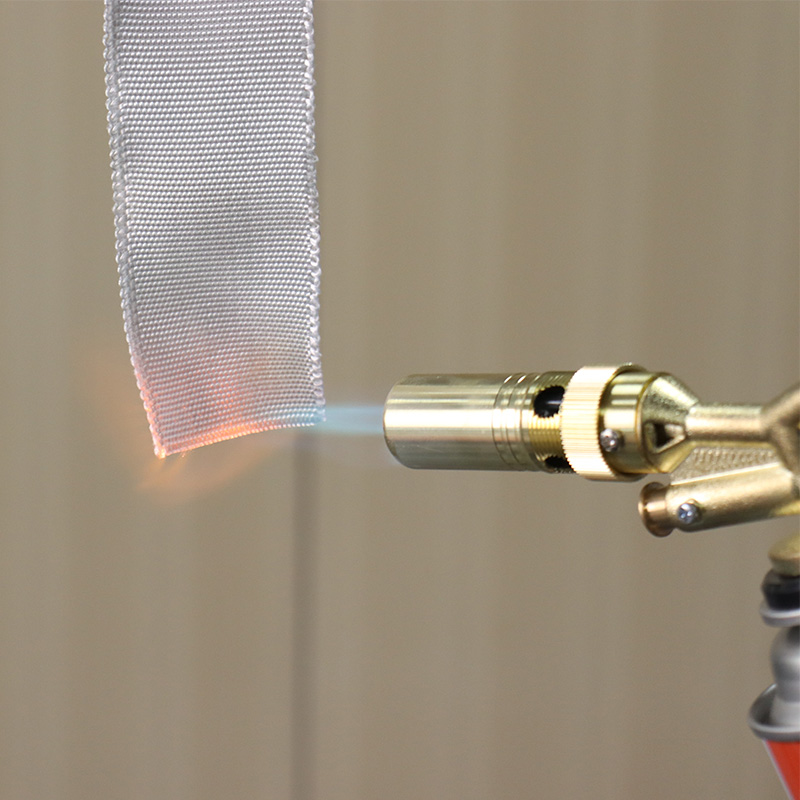 High Silica Wrap Tape for 1000°C Thermal ProtectionWoven from high-silica yarn with over 96% silicon dioxide, this tape withstands continuous 1000°C temperatures, offering low thermal conductivity and flexibility for sealing, insulation, and filtration applications.View Product →
Installation and Maintenance Considerations
Thermal insulation is only effective if it stays in place over the working life of the vehicle or equipment. Both methods require attention to installation details, but their long-term behavior is different.
- Custom formed jackets are usually installed once and then secured with straps or high-temperature hook-and-loop closures. Because the shape is fixed, they maintain their coverage even after repeated thermal cycles.
- Standard wrapping must be wound carefully with consistent tension. Loose sections can vibrate, trap moisture, and accelerate corrosion of the underlying pipe.
- Jackets can be removed as one piece, which makes access to spark plugs, sensors, or turbo hardware easier. Wraps may need to be cut off and replaced after maintenance.
- Both solutions need outer layers that resist oil, coolant, and water. Oil-soaked insulation is a fire risk, so self-adhesive and silicone-coated tapes are often preferred in mobile equipment.
- For turbocharger covers, custom fit reduces the risk of heat being trapped around the actuator or wastegate linkage in an uneven way.
Practical tip: check the temperature rating of the inner material, the continuous operating temperature, and whether the outer shell can withstand the fluids found in your engine bay.
Frequently Asked Questions
Q1: Can standard wrapping be used on a turbocharger housing?
Yes, but the result depends on the shape of the housing and the quality of the wrap. Straight portions can be covered well, but tight corners often leave small openings that reduce heat retention. A custom formed jacket provides more consistent coverage.
Q2: What materials perform best in turbo heat retention?
Ceramic fiber, high-silica fiber, basalt fiber, and quartz fiber are all effective in high-temperature insulation. The best material depends on the continuous temperature, vibration level, and space available. Multi-layer jackets that combine a ceramic inner layer with a durable outer shell often deliver the highest performance.
Q3: Do thermal jackets protect components other than the turbo?
Yes. A well-designed custom jacket keeps radiant heat away from hoses, wiring, plastic components, and the hood. It also helps reduce heat soak in the turbocharger after engine shutdown, which is important for oil life and starter performance.
Final Verdict
Custom formed thermal jackets and standard wrapping are both valuable tools for turbo heat management, but they answer different needs. When the objective is superior turbo heat retention at the turbocharger housing itself, the custom formed jacket has a clear advantage. Its exact fit, stable coverage, and easy removal make it the preferred solution for high-performance and heavy-duty applications.
Standard wrapping remains an excellent choice for exhaust pipes and manifolds, especially when cost and installation speed matter. For maximum results, many operators use both strategies: a custom formed jacket on the turbocharger and quality wrap tape on the remaining exhaust path. This combined approach keeps exhaust heat energy where it belongs and gives the engine the fastest possible spool response while protecting every heat-sensitive component in the engine bay.