English
 Español
 عربى
عربى

Content
Background and Challenges
In many industrial environments where extreme heat prevails, traditional insulating materials such as ordinary ceramics, mineral wool, or fibreglass begin to fail due to degradation, structural breakdown, or loss of insulating properties. These materials may suffer from cracking, spalling, or thermal expansion mismatch as temperatures repeatedly cycle, leading to compromised performance and safety risks. When faced with thermal gradients, mechanical vibration, or chemical exposure, such conventional options struggle to maintain dimensional stability and insulation integrity, which drives the need for more advanced, high-performance insulating solutions that can endure harsh thermal and mechanical stress over extended durations.
Core Product Characteristics Explained
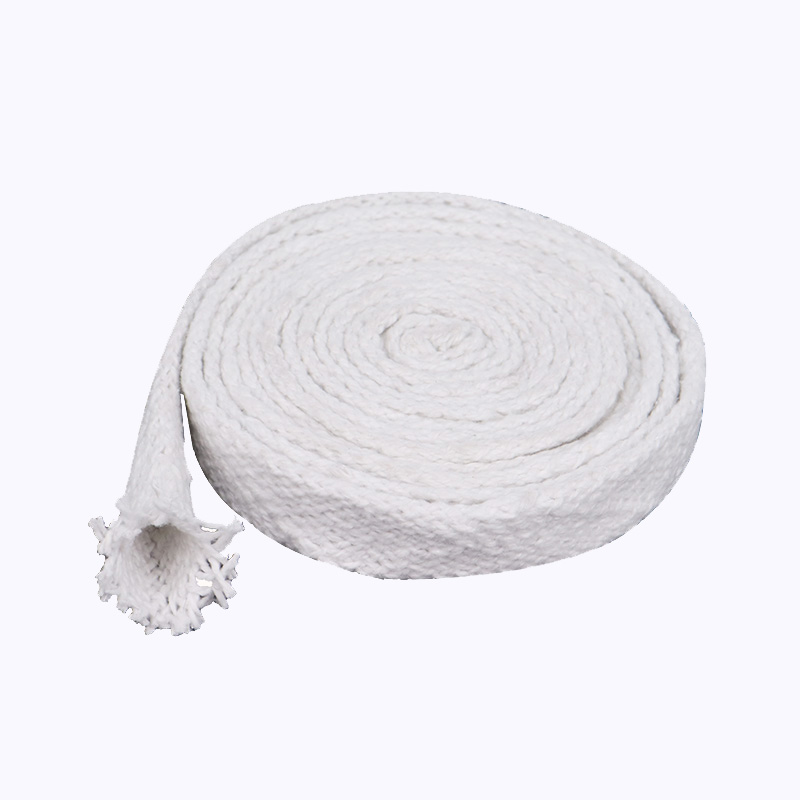
A well-designed ceramic fiber sleeve is composed of high purity ceramic fibers, often in the alumina-silica (or mullite) family, woven or braided into tubular form. The fibers are selected for low thermal conductivity, excellent chemical stability, and resistance to oxidation under high temperatures. Its structure allows for a combination of thermal stability across a broad temperature range and resistance to thermal shock, meaning that it can survive rapid heating and cooling cycles without cracking or degrading. In addition to its thermal properties, the mechanical strength and flexibility of such a sleeve are critical: the material must handle handling stresses, vibration, bending, or even occasional mechanical abrasion without disintegrating or losing shape. The balance of high strength and pliability is often achieved through careful fiber orientation, controlled density, and optional reinforcement.
Typical Application Scenarios and Selection Advice
In thermocouple protection, the sleeve acts as a barrier between the fragile thermocouple wire and harsh furnace or exhaust environments. It must tolerate not only high ambient temperature but also chemical exposure, thermal cycling, and mechanical vibration, ensuring that the sensor remains accurate and undamaged. In furnace or high-temperature piping systems, the sleeve can serve as a customizable insulation wrap around pipes, flanges, or joints; in these settings it helps maintain thermal efficiency, protect nearby components, and reduce heat loss. In cable or heater line protection, where electrical heating elements or sensor wiring run through hot zones, a ceramic fiber sleeve offers a resilient insulating jacket that resists softening, charring, or electrical breakdown, thus safeguarding system longevity. In each scenario, selection must consider maximum temperature, inner diameter fit, wall thickness, flexibility, and whether reinforcement is needed to resist abrasion or handling.
Reinforcement and Enhancement Techniques
To improve mechanical robustness without sacrificing insulating performance, many ceramic fiber sleeves are enhanced through reinforcement strategies. One common approach is embedding thin stainless steel wire or glass fiber filament within the fiber matrix; this adds tensile strength and tear resistance while preserving thermal insulation. Regarding structural forms, a braided sleeve offers a more homogeneous distribution of fibers and reinforcement, giving excellent flexibility and strength, whereas a wrapped or spiral-wound structure might offer cost advantages or ease of fabrication in certain sizes. In more demanding applications, multi-layer or composite structures are deployed wherein an inner layer provides thermal insulation, a middle reinforcement layer ensures mechanical stability, and an outer sacrificial protective layer handles abrasion or chemical exposure. This layered design allows engineers to tailor the sleeve to specific environmental stresses without overdesigning a single homogeneous material.
Usage Precautions and Maintenance Strategies
During installation, care must be taken to avoid sharp bends, twists, or compression that might damage the fiber matrix or embedded reinforcement; gentle handling and proper support spacers are essential for long service life. Over time, exposure to thermal cycling, vibration, or particulate abrasion can lead to gradual fiber erosion, microcracks, or densification; it is prudent to inspect periodically and replace segments that show signs of thinning, fraying, or structural compromise. In environments where contamination or chemical exposure is possible, protective coatings or outer wraps may be added to shield the sleeve from corrosive attack. If premature failures occur, typical causes include mechanical abrasion, incorrect diameter causing scraping, repeated flexing beyond design limits, or exceeding the thermal rating; diagnosing and remedying these root causes is vital to ensure reliable operation in future service cycles.