English
 Español
 عربى

Content
- 1 Why Header Heat Costs Power, Parts and Comfort
- 2 What an Exhaust Insulating Wrap Really Does
- 3 Choosing the Right Material for Your Header
- 4 Motorcycle Headers: Tighter Packaging, Higher Stakes
- 5 Installation: The Steps That Decide Whether It Lasts
- 6 Where Wrapped Headers Go Wrong
- 7 Protecting the Rest of the Hot Side
- 8 Frequently Asked Questions
- 9 Sourcing Wrap That Matches the Build
An exhaust insulating wrap looks like a simple roll of tape, yet it changes how heat moves through an entire performance build. On a car or a motorcycle, the header and downpipe are usually the hottest surfaces under the skin, and every component nearby pays for that heat: wiring, fuel lines, coolant hoses, fork seals, fairing panels, and the rider's leg. Wrapping the exhaust is one of the few modifications that costs little, installs in an afternoon, and produces a noticeable change in bay temperature and gas behaviour.
This guide explains what exhaust insulating wraps actually do for performance automotive and motorcycle headers, which fibre suits which application, how to install a wrap so it survives heat cycles, and where wrapped headers commonly go wrong.
Why Header Heat Costs Power, Parts and Comfort
Exhaust gas leaving the combustion chamber is far hotter than most people expect, and the header wall absorbs that energy within centimetres of the flange. Everything within a short radius then receives it by radiation rather than by contact, which is why a wrapped or coated header often changes more than the pipe itself.
- Charge density. Hot surfaces warm the air around the intake tract and raise the temperature of the air entering the engine. Denser air carries more oxygen, so lower bay temperatures support the calibration a tuner has already written.
- Component life. Alternators, starter motors, sensors, rubber boots and plastic clips all age faster when they sit in a radiant heat field. Insulation buys service life rather than horsepower.
- Exposure. On a motorcycle, the header runs beside the rider's leg and the fairing's lower panel. Heat there is a safety issue, not just a comfort one.
- Thermal fatigue. Repeated uneven heating and cooling stresses welds and flanges. Controlling where heat escapes helps reduce that cycling.
The practical benefit of an exhaust insulating wrap is therefore rarely a single dramatic number. It is the sum of lower surrounding temperatures, better-protected electronics, and a more predictable thermal environment for the whole build.
What an Exhaust Insulating Wrap Really Does
A wrap is a thermal barrier wrapped in tension around the pipe. It works in three ways at once, and understanding each one explains why installation quality matters so much.
It keeps heat inside the gas stream
A bare metal header sheds energy quickly. Insulating the pipe slows that loss, so the exhaust gas stays hotter and less dense for longer. Less dense gas accelerates more readily through the same cross-section, which is the mechanism behind the familiar claim that wrapping improves scavenging. On a turbocharged engine the effect is more tangible: keeping energy in the manifold and turbine housing helps the turbine respond and reduces the heat that soaks into the engine bay.
It replaces radiant heat with a slower, wider spread
The wrap's outer surface still gets hot, but it radiates far less than bright metal. Energy that would have been beamed at a nearby hose is instead spread gradually along the pipe and dissipated into the airflow under the vehicle. That is the change most installers actually feel when they open the bonnet after a hard run.
It cannot compensate for a bad combination
A wrap does not fix a lean mixture, an undersized cooling system or a cracked manifold. It also traps moisture against the steel, which is why untreated mild steel headers should be coated, painted or replaced with stainless before wrapping. Used with awareness, it is a reliable tool; used as a cure-all, it hides problems.
Choosing the Right Material for Your Header
All exhaust insulating wraps share the same working principle, but the base fibre sets the real temperature ceiling. Choosing a material below the operating range of the header shortens service life dramatically, while choosing far above it adds cost without benefit.
| Material | Typical service ceiling | Best suited to | Practical notes |
|---|---|---|---|
| Fiberglass | Around 500 °C | Street cars, mild steel headers, budget builds | Lowest cost, thickest profile, softens if pushed beyond range |
| Basalt fibre | Around 750 °C | Mixed street and track cars, stainless motorcycle headers | Good abrasion resistance, holds shape after cure |
| High-silica tape | Around 1000 °C | Turbo manifolds, narrow pipes, tight radius bends | Thinner and more flexible, easier on small-diameter tubing |
| Ceramic fibre | Around 1100 to 1260 °C | Race engines, turbo hot sides, extreme duty | Most brittle, needs gentle handling and a secure tie-off |
Width matters as much as fibre. A 50 mm roll suits large primary tubes on a V8, while 25 mm tapes conform far better to the tight bends found on four-cylinder and motorcycle headers. Self-adhesive backing helps hold the first wrap in position, but stainless ties should still do the final securing.
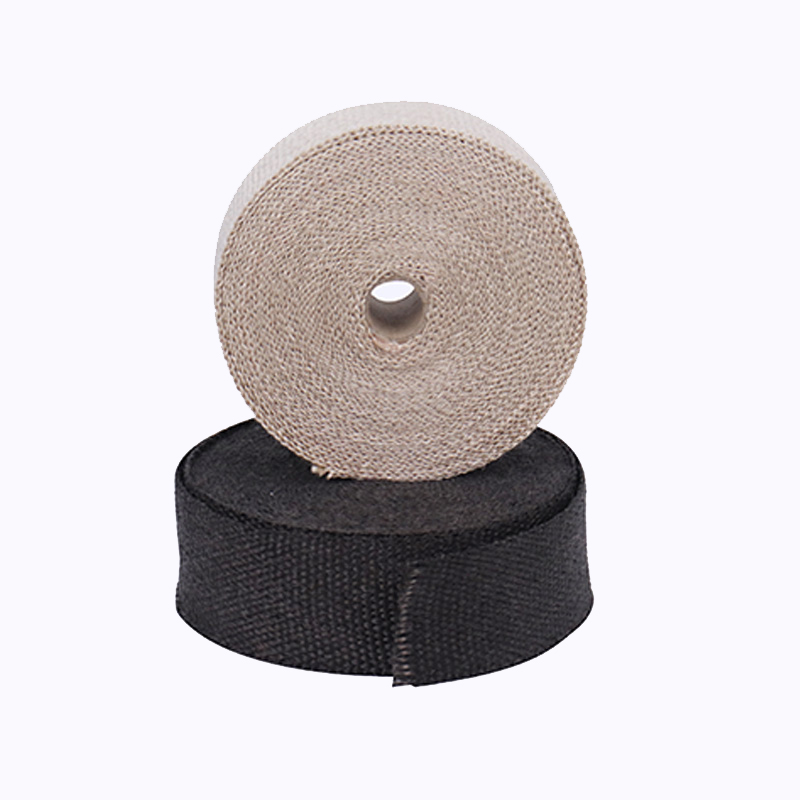 High-Temperature Fiberglass Exhaust Insulating WrapFiberglass twisted exhaust wrap for thermal protection of headers, hoses and ducts, with a 550°C continuous rating and multiple widths.View Product →
Motorcycle Headers: Tighter Packaging, Higher Stakes
Motorcycles compress every thermal problem into a smaller space. Single-wall headers on many machines run close to the rider's boot, the lower fairing, brake lines and the front fork seals, and there is rarely any airflow management to help. An unwrapped header on a hot day can make a machine genuinely unpleasant in traffic and can soften or discolour nearby plastics over time.
Two details separate a good motorcycle wrap job from a poor one. First, narrow tape follows the tight radius bends of a two- or four-into-one collector far more cleanly than a wide roll, which tends to lift and leave gaps on the inside of a bend. Second, moisture control matters more on a bike that is washed regularly and parked outside, so a sealed outer coating and a fully cured wrap are worth the extra time.
Where the header is difficult to wrap, a slip-on protective sleeve over the section nearest the rider achieves a similar result with less disassembly. Combining the two approaches is common on touring and adventure builds.
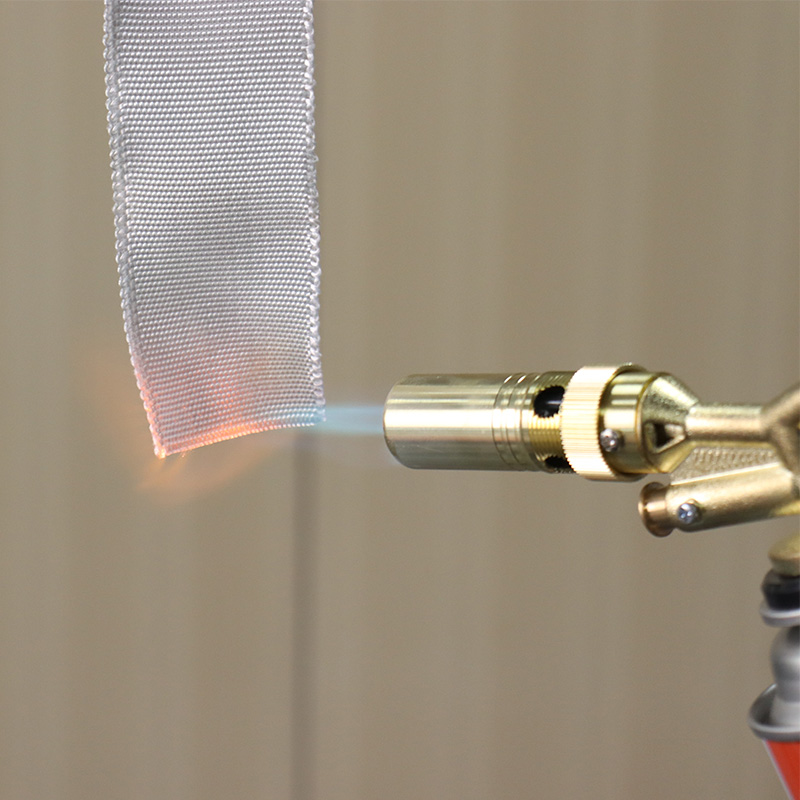 High Silica Extreme-Temperature Wrap TapeHigh-silica tape rated to 1000°C continuous for exhaust and industrial thermal insulation, available in multiple widths and thicknesses.View Product →
Installation: The Steps That Decide Whether It Lasts
Most wrap failures trace back to preparation rather than material. A methodical installation is the difference between a barrier that lasts seasons and one that frays within weeks.
- Clean and inspect the pipe. Remove the header, degrease it fully and check for cracks or heavy corrosion. Wrap hides damage rather than repairing it.
- Seal bare steel. Apply a high-temperature coating to mild steel before wrapping so trapped moisture has no direct path to the metal.
- Soak fibre wraps. Most fibre wraps are easier to tension when dampened. Wear gloves, since the fibres are abrasive to skin.
- Start at the flange and work downstream. Begin with a full turn folded over the end, then keep constant tension so overlaps stay uniform.
- Overlap consistently. A quarter to half overlap seals the gaps that otherwise let hot gas escape and shorten the wrap's life.
- Tie off with stainless. Metal ties at the start, middle and end hold tension after the wrap dries and shrinks.
- Run a proper cure cycle. Idle the engine briefly, let it cool, then repeat with progressively longer runs. Expect smoke and odour on the first heat cycles.
After curing, a high-temperature sealant spray keeps the surface intact against road spray, oil and repeated washing.
Where Wrapped Headers Go Wrong
Knowing the common failure points makes it easier to avoid them before the first cut of tape.
- Wrapping over a leaking joint. Hot gas escaping under the wrap burns it from the inside and destroys it locally.
- Covering service points. Oxygen sensor bosses, lambda bungs and drain plugs should remain accessible.
- Over-tightening on flex sections. Bellows and slip joints need room to move; a flexible sleeve is a better choice there.
- Leaving the wrap wet. A wrap installed wet and never properly cured stays damp against the steel for weeks.
- Ignoring the rest of the harness. Wrapping the header while leaving cables exposed a few centimetres away solves only half the problem.
Heat management is a system, and small decisions compound. Understanding how an exhaust insulating wrap reduces heat waste and fuel consumption helps set realistic expectations before installation begins.
Protecting the Rest of the Hot Side
The header is the most obvious heat source, but on a forced-induction build the turbine housing and downpipe radiate at least as much energy into the bay. A fitted cover over the hot side of the turbocharger reduces that radiation, shortens heat soak after shutdown and protects the surrounding pipework.
 Custom-Fit High-Temperature Turbocharger Heat Shield CoverFitted turbocharger cover with glass fiber and silica insulation to reduce radiant heat and protect nearby hoses, wiring and painted surfaces.View Product →
Alongside the exhaust, wiring looms and sensor cables running close to the manifold benefit from a dedicated insulation sleeve, which handles chafe as well as temperature. Together these pieces form a complete barrier around the engine rather than a single protected pipe.
Frequently Asked Questions
Q1: Does wrapping a header really add power?
Direct gains are small on a naturally aspirated engine and depend heavily on calibration and the rest of the build. The reliable benefits are lower surrounding temperatures, better protection for electronics and a more stable thermal environment for tuning.
Q2: Will an exhaust wrap cause the header to crack?
Quality stainless headers in good condition handle wrapping well. Thin or already fatigued steel, especially mild steel without a coating, is more likely to corrode under trapped moisture, which is why surface preparation matters so much.
Q3: How much wrap does a header need?
Measure the length of each pipe and multiply by the number of pipe diameters plus roughly twenty per cent for overlap and tie-off. Under-buying mid-installation is the most common practical mistake.
Q4: Is a wrap or a protective sleeve better for a motorcycle?
Wraps suit headers that can be fully removed and prepared. Slip-on sleeves are faster and more serviceable on sections that stay in place, and the two approaches work well together on the same machine.
Q5: How long should an exhaust wrap last?
With correct curing, stainless ties and a sealed surface, several years of road use is realistic. Track use, road salt and repeated pressure washing shorten that considerably.
Sourcing Wrap That Matches the Build
Material choice, tape width and surface treatment decide whether an exhaust insulating wrap performs as a barrier or simply as decoration. Buyers working on performance automotive and motorcycle headers should confirm the fibre's service ceiling, the availability of matching width options, and whether the manufacturer can supply coating, ties and sleeves from the same production line.
Ningguo Zhongdian Insulation Material Co., Ltd has produced high-temperature resistant fibre composites since 2008 from its facility in Ningguo, Anhui Province, working across basalt, high-silica, ceramic, fiberglass and quartz materials in sleeve, fabric and wrap-tape form. ISO 9001 and ISO 14001 certification, together with CE, UL flame-retardant and RoHS testing, supports export supply to the United States, Southeast Asia and beyond. For builders who need a wrap, a sleeve and a heat shield that all behave predictably at temperature, matching those components from a single technical source is the simplest route to a result that lasts.