English
 Español
 عربى

Content
- 1 Material Fundamentals: How Each Wrap Is Built
- 2 Thermal Performance in Narrow Pipe Spaces
- 3 Ceramic Fiber Winding Belt vs Fiberglass Wrap Tape: Side-by-Side Comparison
- 4 Installation and Mechanical Behavior in Confined Areas
- 5 How to Choose the Right Wrap for Your Pipe System
- 6 Energy Efficiency Considerations for Continuous Processes
- 7 Frequently Asked Questions
- 7.0.1 Q1: Can fiberglass wrap tape replace a ceramic fiber winding belt at very high temperatures?
- 7.0.2 Q2: Which wrap is easier to install in a narrow pipe space?
- 7.0.3 Q3: Do these wraps provide electrical insulation as well as thermal insulation?
- 7.0.4 Q4: Can I stack multiple layers of wrap tape to improve insulation?
- 8 Final Recommendation
When pipes run through confined spaces and carry extreme heat, choosing the right insulation wrap is not a minor detail. It determines how long the line stays protected and how reliably the system performs. Ceramic fiber winding belts and fiberglass wrap tapes are two of the most common solutions for narrow pipe insulation. Although they look similar at a glance, their material structure, temperature limits, and installation behavior differ considerably. This guide compares them side by side and explains when each one is the better choice for tight pipe runs.
Material Fundamentals: How Each Wrap Is Built
Ceramic fiber winding belts are produced from refractory ceramic fibers that are needled into a flexible belt structure. The fibers are typically alumina-silica based, which gives the belt exceptional resistance to continuous heat exposure. Because the structure is soft and compressible, the belt can be wrapped tightly around uneven surfaces, valve bodies, flanges, and small-diameter pipes where rigid insulation boards cannot fit.
Fiberglass wrap tape, by contrast, is woven from continuous glass filaments into a flat, dense tape. The weaving process gives it dimensional stability, a smooth surface, and a tighter edge than ceramic fiber belts. It resists stretching and tearing during installation, which makes it a practical choice for straight pipe sections and for applications where mechanical handling is frequent.
The key difference is therefore one of structure: ceramic fiber winding belts are soft, fibrous, and highly conformable, while fiberglass wrap tapes are woven, crisp, and mechanically robust.
Thermal Performance in Narrow Pipe Spaces
Thermal insulation in narrow spaces demands a material that provides the greatest possible thermal resistance with the thinnest possible profile. Both products deliver meaningful protection, but they operate in different temperature ranges.
Ceramic fiber winding belts typically withstand continuous service temperatures of up to 1260°C. Their low thermal conductivity reduces radiant and convective heat transfer exceptionally well, which is why they are widely used in metallurgy, chemical processing, and high-temperature exhaust systems. A thin layer of ceramic fiber belt can create a substantial temperature drop across the pipe wall.
Fiberglass wrap tape, depending on the weave density and coating, is generally rated for continuous exposure up to 260–540°C. It performs reliably within that range and offers strong dielectric strength, making it useful for protecting hoses and wiring as well as pipes.
For pipes operating above 600°C, the practical choice narrows quickly. The ceramic fiber winding belt retains its insulating properties where fiberglass would degrade and become brittle. For applications below 300°C, fiberglass wrap tape offers a cost-effective and mechanically tougher alternative.
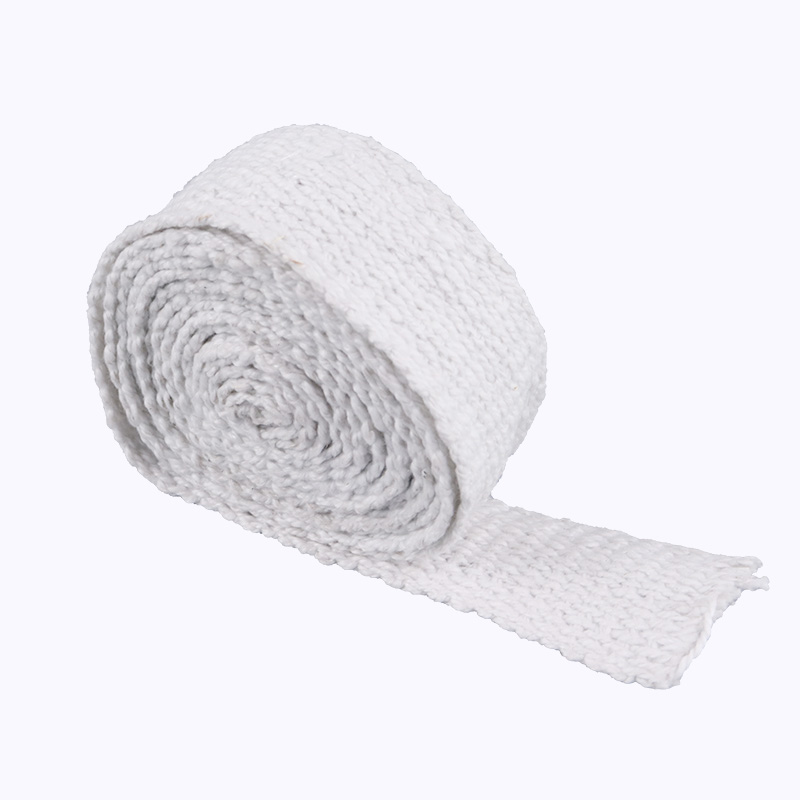 Ceramic Fiber Winding Belt for High-Temperature Pipe InsulationThis woven aluminosilicate tape withstands continuous heat up to 1000°C, making it suitable for insulating pipes above 600°C where fiberglass fails. It also protects hoses and cables in extreme environments.View Product →
Ceramic Fiber Winding Belt vs Fiberglass Wrap Tape: Side-by-Side Comparison
| Property | Ceramic Fiber Winding Belt | Fiberglass Wrap Tape |
|---|---|---|
| Continuous service temperature | Up to 1260°C | 260–540°C |
| Thermal conductivity | Very low | Low to moderate |
| Flexibility around tight bends | Excellent | Good |
| Abrasion resistance | Moderate | Excellent |
| Edge stability | Soft, can fray | Clean woven edges |
| Moisture resistance | Good when covered | Good with suitable coating |
| Effective thin-layer insulation | Yes | Moderate |
| Best suited for | Extreme heat, irregular surfaces | Mechanical duty, moderate heat |
Installation and Mechanical Behavior in Confined Areas
Installing insulation inside a narrow pipe chase or between closely spaced lines is a different challenge than insulating an open manifold. The installer needs a wrap that slides into position, follows the pipe contour, and holds its place while being secured.
Ceramic fiber winding belts excel at conforming. Their fibrous, pliable body presses into tight radii and around weld seams, and they can be cut with scissors to create custom widths for irregular sections. In automotive engine bays, where exhaust pipes share space with hoses, wiring, and structural brackets, this conformability is a major advantage. The tradeoff is that the soft surface is more vulnerable to abrasion, so an outer cover is often advisable where the wrapped pipe may rub against neighboring components.
Fiberglass wrap tape brings a woven structure that resists edge curling and stays flat during wrapping. It can be tensioned more firmly, which helps create a compact, uniform layer on straight or gently curved pipe runs. It also tolerates vibration better over time. However, on extremely tight bends, the stiffer weave may bridge gaps rather than fully seat into the curve.
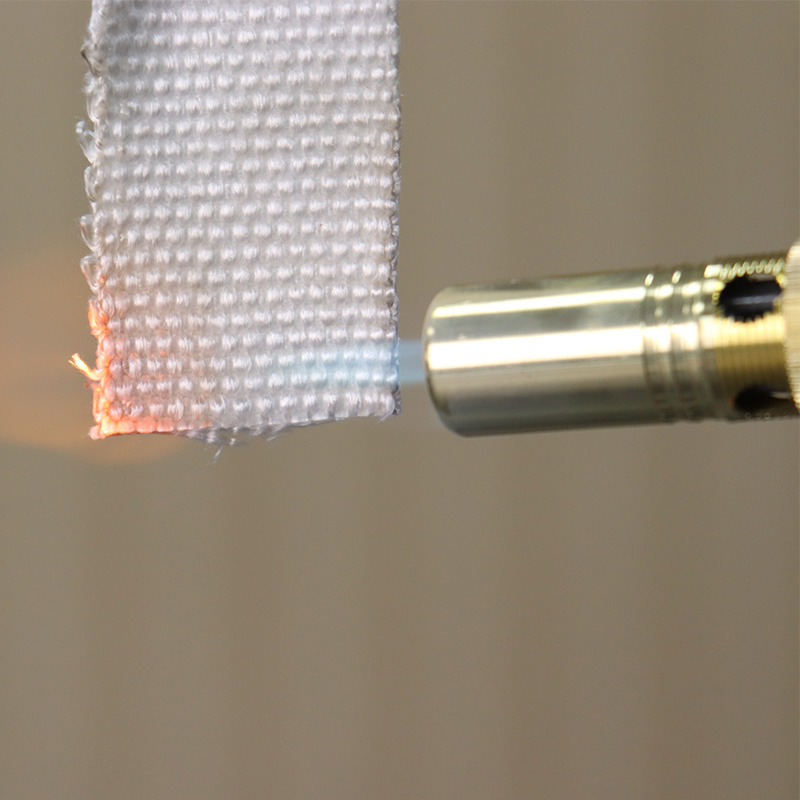 Fiberglass High-Temperature Wrap Tape for Industrial PipingReinforced glass fiber tape rated for 800°C offers a durable, vibration-resistant wrap for pipe runs and flanges. Its firm weave suits straight or gently curved sections, though tight bends may need a more flexible option.View Product →
How to Choose the Right Wrap for Your Pipe System
The decision comes down to process temperature, mechanical exposure, and the shape of the space you are insulating. Use the following guidance as a starting point.
Choose a ceramic fiber winding belt when:
- The pipe surface temperature exceeds 600°C, especially in metallurgical or chemical processes.
- The space is too narrow for a rigid insulation layer, and the wrap must conform to an irregular contour.
- You need minimal heat storage so the line cools quickly during maintenance shutdowns.
- The pipe has flanges, valves, or weld seams that create uneven geometry.
Choose fiberglass wrap tape when:
- Operating temperatures stay below 300–500°C.
- The installation is handled frequently or exposed to vibration and mechanical contact.
- You need a clean, stable edge that will not fray or shed fibers easily during wrapping.
- A cost-efficient solution is required for long, straight pipe runs.
If your application involves multiple pipe diameters and a wide temperature range, a hybrid approach is common: use fiberglass wrap tape for the cooler feed lines and ceramic fiber winding belts for the hottest sections. For a broader view of how these materials compare with other insulating products, read our guide on how to select the right high-temperature insulation protective wrapping tape.
Energy Efficiency Considerations for Continuous Processes
In continuous manufacturing, heat lost through uninsulated pipe surfaces is not just a comfort issue. It is a direct energy cost. Choosing the right wrap reduces surface temperature, lowers heat loss, and helps process equipment reach operating temperature faster. This is especially true for narrow pipes, where traditional insulation thickness simply will not fit. As discussed in our article on why choosing a ceramic fiber winding belt can effectively reduce industrial energy waste, the material's low thermal conductivity and low heat capacity make it especially effective in systems with cyclical heating and cooling.
Frequently Asked Questions
Q1: Can fiberglass wrap tape replace a ceramic fiber winding belt at very high temperatures?
No. Fiberglass wrap tape degrades above roughly 540°C, while ceramic fiber belts remain stable up to 1260°C. For exhaust manifolds, furnace lines, and other extreme heat sources, ceramic fiber is the safer choice.
Q2: Which wrap is easier to install in a narrow pipe space?
Ceramic fiber belts conform more easily to tight bends and irregular surfaces. Fiberglass tape is easier to tension along straight runs but can bridge sharp curves. The answer depends on the geometry of your pipe layout.
Q3: Do these wraps provide electrical insulation as well as thermal insulation?
Fiberglass wrap tape offers strong dielectric properties and is often used where electrical insulation is also required. Ceramic fiber is mainly valued for thermal performance; check the specific product rating if electrical isolation is critical.
Q4: Can I stack multiple layers of wrap tape to improve insulation?
Yes, both materials can be layered. Overlapping fiberglass tape creates a denser barrier, while multiple passes of ceramic fiber belt reduce surface temperature further. Ensure the outermost layer is mechanically protected if abrasion is a concern.
Final Recommendation
Narrow pipe insulation requires a wrap that fits the space, survives the heat, and remains practical to install. For extreme temperatures above 600°C, a ceramic fiber winding belt is the more reliable solution thanks to its low thermal conductivity and flexibility. For moderate heat with mechanical wear and vibration, fiberglass wrap tape delivers durability and clean handling at a lower cost. Match the material to your operating profile, and the insulation will protect the pipe, reduce energy loss, and simplify maintenance for years to come.